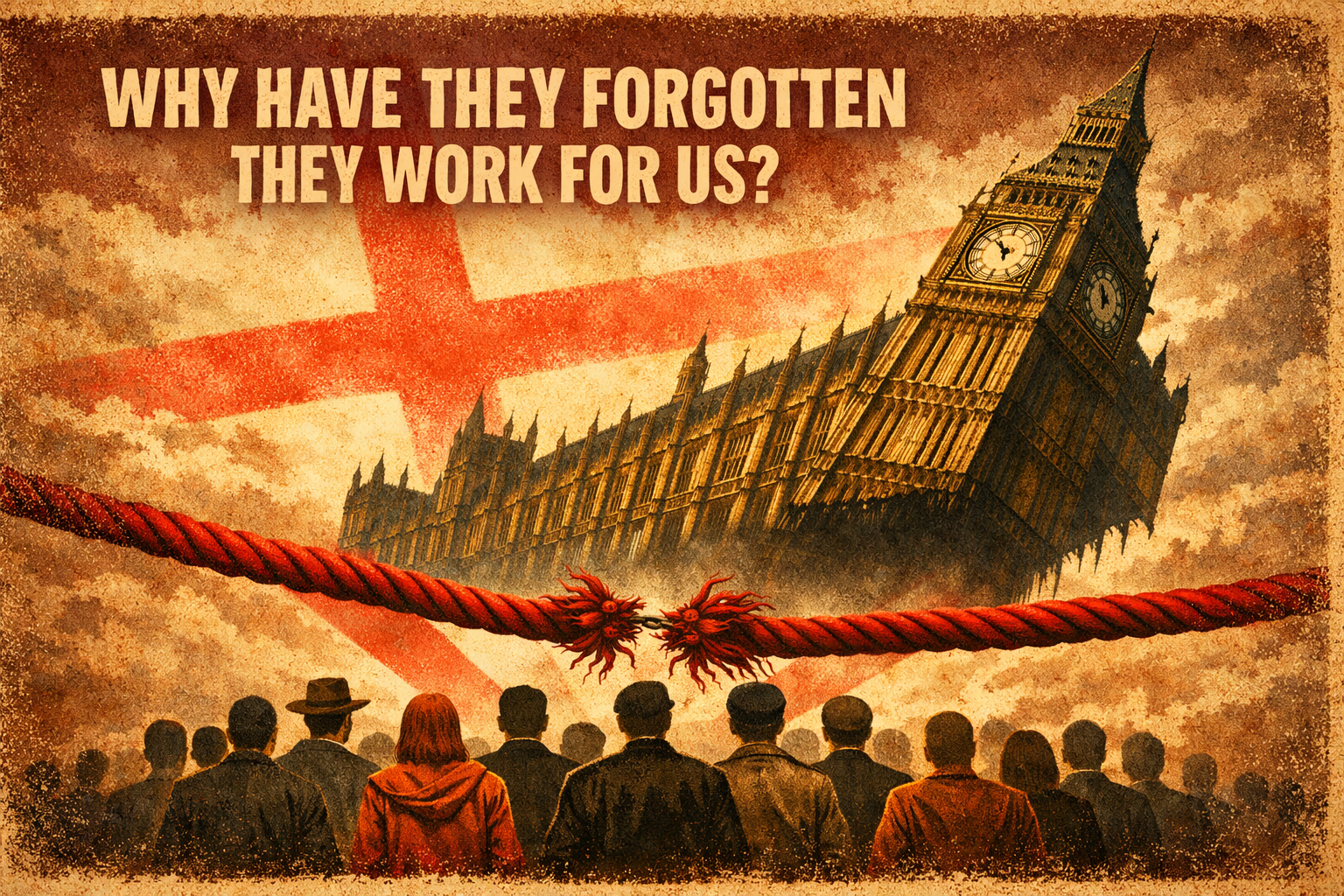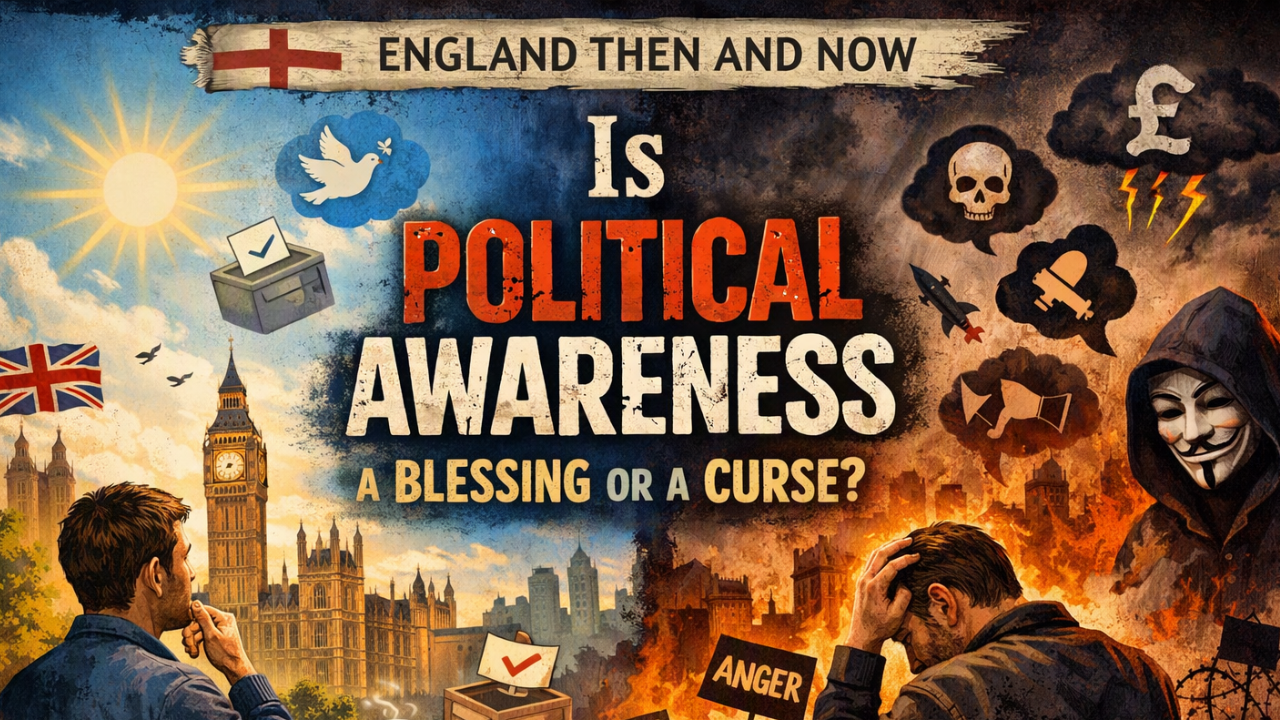
They tell you political awareness is a virtue in England.
“Stay informed.”
“Follow the news.”
“Know what’s going on.”
After the last month, I’m not sure they’re telling the truth.
I’ve spent over 40 years watching politics and the news closely. I watched Thatcher come in, Blair sell us “cool Britannia”, Cameron call the EU referendum, May do the “Robot dance” and then flounder trying to deliver Brexit, and then Boris Johnson crash us out under a big blue “Get Brexit Done” banner.
And here’s the part that matters if you’re paying attention.
The man who fronted Vote Leave, sold “take back control” on the side of a bus, and promised to get Brexit done – Boris Johnson – has never looked like a conviction Brexiteer. His own former leader, David Cameron, said he backed Leave to help his career. His family background and his father’s open globalist, pro‑EU instincts are no secret. Johnson talks sovereignty to the cameras, then treats supranational clubs and global stages as his natural home.
That’s what political awareness in England looks like in reality:
You remember who said what.
You remember why they said it.
You remember where they came from.
You see the gap between the sales pitch and the man selling it.
This last month has been one of the clearest I’ve ever seen.
So I’m asking a simple question:
Is political awareness in England a blessing or a curse – and is it still worth the pain?
If you’ve felt the weight of knowing too much, this is for you.
What political awareness actually looked like for me this month
When people say “political awareness in England”, they usually mean following a few accounts and catching the headlines. That isn’t awareness. That’s passive consumption.
For me, political awareness means:
- Watching the announcement and then checking what happened seven days later.
- Reading the first report and then reading the court record or the police statement.
- Noticing the gap between the headline and the line buried halfway down the follow‑up piece.
This month, that meant tracking three things:
- A supposed “credible” right‑wing terror threat to a huge Islamic event in Suffolk, and the twelve arrests that went with it.
- The way social media reacted when I called out lies and spin – whataboutery instead of research.
- The lingering Brexit sell‑job: Johnson’s “Get Brexit Done” pitch, his record, and the way people still treat him as Mr Sovereignty while ignoring his Remain‑leaning instincts and globalist roots.
On paper, I’m the kind of citizen every civics teacher says they want: engaged, informed, aware. In reality, political awareness England this month has felt less like a badge and more like a burden.
Let’s walk through it.
The Shrubland Hall “terror plot”: awareness vs the official script
Middle of July.
Thousands of Muslims gather at Shrubland Hall, a country estate in Suffolk, for a major Islamic event – the UK Ijtima. It’s big. Around 15,000 people. Families. Worship. Talks.(That is actually banned in lots of countries including Saudi Arabia)
Then the story breaks.
Twelve people arrested nationwide. Eight detained under Terrorism Act powers. The event told to finish early. We are told there is a “credible” extreme right‑wing terror threat against the gathering.
The Home Secretary, Shabana Mahmood, goes in hard. She stands up and says the police response has “undoubtedly saved lives”. She spells out the danger. This is serious. This is right‑wing extremism. This is why we need tough laws, strong communities, and calm leadership.
If you only see that statement, political awareness looks simple:
- Bad white Nazi guys.
- Good police.
- Brave Home Secretary.
- Lives saved.
- End of story.
But if you stay aware, you don’t stop there.
You keep watching.
Days later, the picture changes. Quietly. No podium. No drama.
We find out that most of those arrested have been released. No terrorism charges. Counter‑terror police admit they have found no evidence to support offences linked to the alleged threat. Eleven of the twelve men are essentially back where they started, except with their names dragged through hell.
The event itself? It didn’t collapse in panic. It ended slightly earlier than planned and definitely not a day early as reported, on police advice. No attack materialised. No bombs. No guns. No proven plot laid out in court.independent.
So what does political awareness in England look like here?
It looks like seeing both halves:
- The “saved lives” soundbite at the start.
- The “no evidence, no charges” footnote at the end.
It looks like asking hard questions:
Was that “credible threat” as solid as advertised?
If it was, why no charges?
If it wasn’t, why did the Home Secretary talk like lives had definitely been saved?
Most people never get to those questions. They only remember the first act. Awareness means you’re forced to sit through the entire play.
That’s where the curse kicks in.
Brexit as a test case: awareness vs the Brexit brand
Brexit is the big, long‑term test of political awareness in England.
If you only see the branding, Brexit means:
- A big red bus promising money for the NHS.
- Blue backdrops with “Get Brexit Done” in friendly fonts.
- Soundbites about “sovereignty” and “taking back control”.
If you keep your eyes open, the picture is uglier.
You remember:
- Cameron called the referendum and campaigned for Remain, thinking he’d win and silence the Eurosceptics.
- Johnson jumped on Vote Leave, sold Brexit as a chance to take back control, and used it as a launchpad for his own career.
- After the result, May spent years floundering, trying to deliver some kind of workable exit and getting blocked at every turn.
- Then Johnson took over, promised to “get Brexit done”, rammed through his harder version, and left the country with unresolved issues around Northern Ireland, trade, and sovereignty gaps that still haunt us.
And you don’t forget that the same Boris Johnson:
- Comes from a family that has never been shy about globalist, pro‑EU instincts. (His Dad was on the Planned Parenthood board with Bill Gates’s Dad, Not surprising when you look at Boris’s Pandemic responses)
- Has a father who has also openly backed Brussels and the wider project.
- Was described by Cameron as backing Leave for career reasons, not conviction.
Political awareness in England here means you don’t let “Get Brexit Done” wipe your memory.
You remember who sold it.
You remember why they sold it.
You remember that the supposed champion of sovereignty is a lifelong member of the global club.
So when you hear “we delivered Brexit” as proof the system can be trusted, awareness tells you: what they delivered was their version, for their reasons, at our expense.
Again, once you see it, you can’t unsee it.
Social media and whataboutery: how the public kills truth
You might think the main problem with political awareness in England is the politicians and the media.
They lie. They spin. They exaggerate. They bury.
And they do.
But this month has reminded me that ordinary people are part of the problem too.
I’ve spent more time than usual on social media. Threads about terror, about political killings, about foreign policy, about bias. You’d hope people would want facts.
Instead, you get whataboutery.
You say: “They’re lying or exaggerating about this threat.”
Reply: “But what about Jo Cox?”
The murder of Jo Cox is a documented horror: shot and stabbed, a full trial, a conviction, a whole‑life sentence, judged as a terror attack tied to far‑right ideology. It’s serious. It deserves attention. But the truth is Thomas Mair is a loner upset about his housing.
But throwing “Jo Cox” into a thread about Shrubland Hall isn’t awareness. It’s deflection.
It doesn’t answer whether Shabana Mahmood oversold a threat that never resulted in charges. It doesn’t deal with the fact that eleven men were arrested and smeared then released without terror charges. It just changes the subject.
Same pattern with foreign policy.
I post that Israel backed Argentina during the Falklands War – a deeply uncomfortable idea for anyone who grew up believing certain allies were always on our side. The reaction?
Not “Is that true? Show me sources.”
Not “That’s serious if correct.”
Just: “So did France.”
Again, that’s not research. It’s dilution. Spread the blame, soften the sting, avoid the feeling that someone you thought was firmly on your side wasn’t.
This is where political awareness in England becomes a curse:
You don’t just see the lies at the top.
You see how quickly people at the bottom rush to protect those lies.
They don’t open a book.
They don’t search a court record.
They don’t read a judgment.
They throw another example on the table and act like the discussion is over.
The system doesn’t just run on false information. It runs on citizens who prefer tribal comfort over uncomfortable truth.
Who is to blame: not just ministers, but a country that prefers lies
It’s easy, especially as an English nationalist, to point only at Westminster.
And yes, they deserve it.
Governments of every colour have lied about the EU, immigration, crime, debt, war, you name it. I’ve watched over four decades of “we’ve got this under control” followed by “we had no idea this would happen”. They sell fantasy and manage decline.
But if we’re honest, the blame isn’t theirs alone.
Political awareness in England is rare partly because:
- The education system doesn’t teach people how to read news critically.
- The media rewards emotion and outrage, not slow checking of facts.
- Social media gives you instant dopamine for “what about X?” replies, not for quiet research.
- Most people have lives to live and don’t want to stare into the political abyss every night.
So we end up with layers of denial:
- Ministers who exaggerate threats because it makes them look tough today.
- Police spokespeople who speak in careful phrases that can be quietly walked back later.
- Journalists who rush the dramatic version out before the evidence comes in.
- Ordinary punters who will defend “their side” no matter what.
Who is to blame for the state we’re in?
Everyone who prefers lies to truth.
From the Cabinet Office to the bloke retweeting a clip he hasn’t watched all the way through.
That’s a harsh answer. But political awareness in England means not pretending the problem is one bad apple in a suit. It’s a whole rotten barrel.
What a serious country would do with political awareness
If the UK was serious, political awareness would be encouraged, not punished.
A serious country would:
- Demand clarity and follow‑up. When a Home Secretary says “lives undoubtedly saved” over a “credible terror threat”, the same media would hammer them a week later if no charges emerged. Either the threat was real and evidence exists, or the language was political theatre and needs confronting.
- Protect individuals from theatrical smears. You don’t casually arrest twelve people, splash “terror plot” over the headlines, then shrug when eleven walk free without charges. A serious country would insist on proportionate language while investigations are ongoing. (Like they did with Henry Nowak & Ann Widdecombe)
- Teach citizens how to read news. Basic skills: spot the difference between allegations and convictions. Understand the gap between “credible threat” and “proven plot”. Recognise whataboutery when it’s thrown at you.
- Stop rewarding spin. Politicians who oversell threats for column inches would pay a price. Not an “oh well” shrug. A genuine hit to their standing.
In that kind of country, political awareness in England would feel like sane citizenship, not like a miserable hobby.
You could follow events, draw conclusions, and trust that lies and exaggerations would be punished.
We don’t live in that country.
Which is why awareness feels more like a curse.
What ordinary people in England can actually do
So, if being politically aware in the UK hurts, is it still worth it?
I think it is.
Because the alternative is worse.
If you want to stay sane and still be aware, here’s what ordinary English men and women can realistically do:
1. Always wait for the second story.
Don’t base your view on the first 24 hours. Ever.
Make it a habit: if a minister uses extreme language – “undoubtedly saved lives”, “worst threat in decades” – set a reminder and see what the evidence looks like a week later.
2. Read at least one primary source per story.
Not a thread. Not a meme.
For Jo Cox, that means reading a proper report on the trial and the judgment, not just reactions. For terror scares, it means reading the police’s own follow‑up statement, not just the initial press conference.
Political awareness in England starts with touching reality yourself once per story.
3. Refuse whataboutery from your own side.
It’s easy to spot deflection from people you oppose. Harder among people you broadly agree with.
If someone answers, “What about X?” when you raise a clear fact, say: “We can talk about X after we’ve dealt with this.” Keep the conversation on the table.
If your own side can’t handle facts, they’re part of the problem.
4. Talk like a grown‑up, not a slogan.
Short paragraphs. Plain English. Calm anger.
You don’t have to shout. You don’t have to scream. You just have to be precise.
Instead of “the system is corrupt”, say, “Here is the claim, here is what happened, here is the gap.” Pin things down.
That’s how you turn awareness into something useful.
5. Accept the pain – but don’t drown in it.
Political awareness in England or anywhere else will not make you happy. It will not make you popular. You’ll see too much, know too much, and watch people you like defend things you can’t stomach.
You can’t fix the whole country alone.
But you can refuse to add to the lies.
You can refuse to spread unresearched nonsense.
You can be the stubborn one who checks the second story.
That’s not glamorous. It’s not “content”.
It’s just being a serious adult in a unserious age.
Conclusion: awareness hurts, but ignorance is worse
So, is awareness a blessing or a curse?
In day‑to‑day emotional terms, it’s a curse.
Political awareness England, lived honestly, means:
- Feeling sick when a terror scare evaporates into “no evidence, no charges”.
- Feeling angry when you watch ministers talk like everything is under control, knowing the numbers say otherwise.
- Feeling lonely when you try to talk about facts and people answer with whataboutery and memes.
But in moral terms, awareness is a duty.
I’ve watched about 40 years of this circus. Governments fall, slogans change, spin gets slicker. The one thing that doesn’t change is the need for people who refuse to swallow lies just because they’re convenient.
Ignorance is easy.
Ignorance is comfortable.
Ignorance is what this system depends on.
Awareness is hard.
Awareness is uncomfortable.
Awareness is the only way anything ever changes.
If you care about England, you don’t get to pick the painless option.
You live with the curse.
You keep your eyes open.
You tell the truth as you see it, and you take the hits.
Because the only thing worse than living in a country run on lies is living in one and not knowing.
FAQs
1. What does “political awareness England” actually mean in this article?
Here it means actively checking official claims against later evidence, not just following headlines or social media reactions.
2. Why do you call political awareness in England a “curse”?
Because seeing the gap between spin and reality is painful and isolating; you can’t comfortably believe the official story once you’ve seen how often it collapses.
3. What was the issue with the Shrubland Hall terror arrests?
Twelve people were arrested and a “credible” threat was announced, but most were later released without terror charges, raising questions about how the situation was sold, and it coincided perfectly with the brutal murder of Ann Widdecombe so deflected a lot of the MSM news air time.
4. How does Brexit fit into political awareness in England?
Brexit shows how slogans like “Get Brexit Done” can hide the career motives and globalist instincts of the people selling them, and how few voters track what was actually delivered.
5. How does social media affect political awareness in the UK?
Social media often encourages whataboutery and tribal deflection instead of research, making it harder to have fact‑based conversations about serious topics