
I’ve been working in and around safety, public information, and digital publishing for 19 years, and if there’s one thing I’ve learned, it’s this: honest, practical information helps people far more than fear‑filled headlines ever will. In this guide, I’ll walk you through what is known about the recent Hyde Park rape at knifepoint, then move quickly into practical safety steps, how male survivors can get help, and what to do if you or someone you love is affected by sexual violence in the UK.
What we know about the Hyde Park rape case
In April 2026, MyLondon and other outlets reported that a man was raped at knifepoint in Hyde Park, close to Speaker’s Corner, and the Metropolitan Police have launched an appeal to identify the suspect. The assault was reported to police on 31 August 2024 and is said to have happened about two months earlier, which is a reminder that many survivors don’t or can’t come forward immediately.
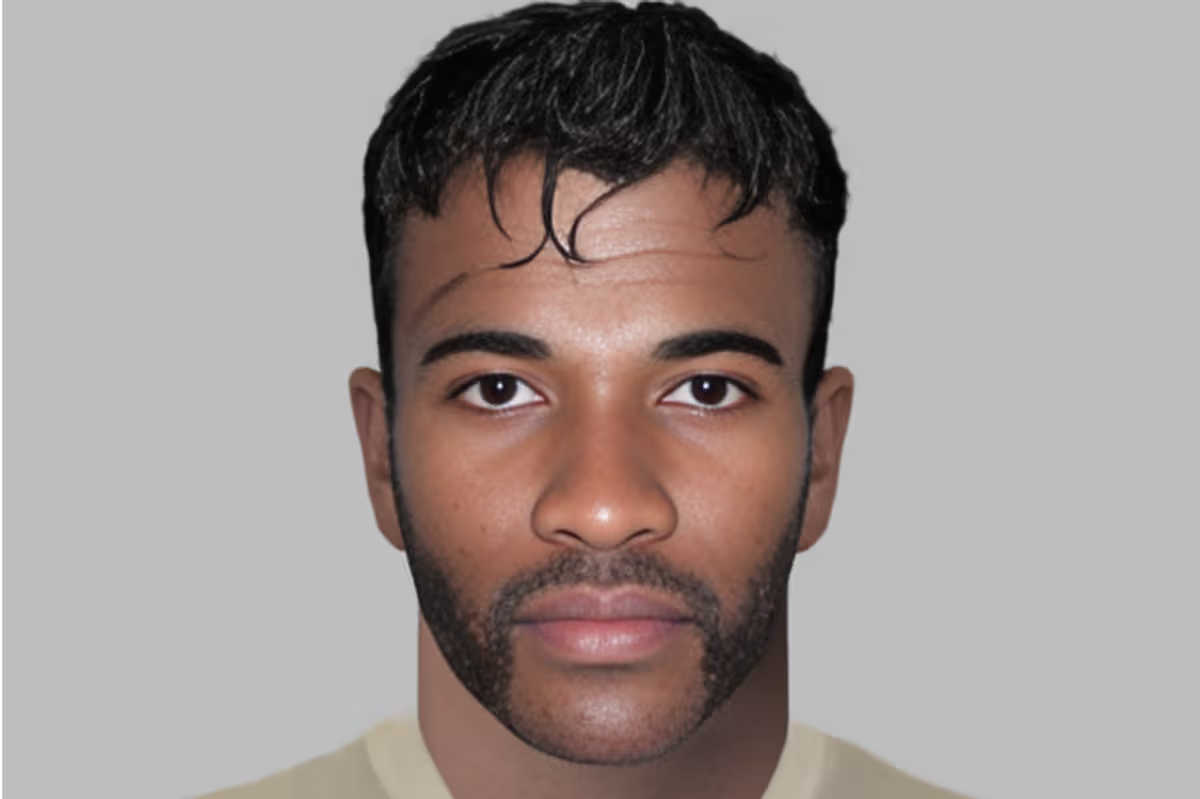
According to the police, the victim was approached by a man who demanded sex, then produced a knife and allegedly cut the victim’s abdomen when he refused, before raping him. Officers have released an e‑fit image and described the suspect as around 5ft 8, with dark short hair, a cut above his left eye, and a flame tattoo on his arm; he’s believed to have spoken Arabic. Detective Constable Kira Halson is leading the investigation, and the Met has asked anyone with information to contact them on 101 quoting reference 01/783179/24 or to share details anonymously via Crimestoppers.
I’ve seen this pattern many times over the years: a frightening headline, a few paragraphs of detail, a police quote, then a phone number. What’s usually missing is exactly what you’re here for—how to make sense of a story like the Hyde Park rape, what it actually means for your safety, and what support is available if you’re directly or indirectly affected.
How safe are London’s parks really?
When a serious sex attack happens in a famous location like Hyde Park, it’s natural to feel as if nowhere is safe. But after nearly two decades of watching crime coverage closely, I can tell you that our brains are terrible at judging risk from headlines alone.
Here’s the reality, based on long‑term patterns rather than one Hyde Park rape story:
- Central London parks see millions of visits every year, and the vast majority pass without incident.
- Most sexual violence is committed by someone the victim already knows, not a stranger in a park, even though stranger attacks grab more media attention.
- That said, a single serious attack in a public space is still important because it exposes vulnerabilities and can be a wake‑up call for better safety habits and better support for survivors.
Personally, I’ve had those moments walking through London parks after dark where you suddenly realise you’re in a very quiet corner, headphones in, and you think, “This was not my smartest move.” That feeling is your early‑warning system, and the point of this article is not to scare you away from public spaces but to help you listen to that instinct and act on it in a practical way.
Practical safety tips for using big city parks
Let’s get specific. If a reader comes to you after reading about the Hyde Park rape and asks, “What am I supposed to do differently?” you want clear, non‑patronising answers. Here are simple, realistic habits that I’ve taught friends, family, and clients over the years.
1. Choose routes with people and light
- Stick to main paths and well‑lit routes, especially after dusk.
- Avoid secluded shortcuts, side gates, and dense shrub areas when you’re alone at night.
- If you’re cutting through a park on your commute, ask yourself: “Would I feel more relaxed taking the slightly longer road route?” If yes, that’s often the better choice.
2. Stay reachable and aware
- Keep your phone charged and accessible—not buried at the bottom of a bag.
- Use “share location” with a trusted friend or partner if you’re walking home late.
- Turn your volume down or use just one earbud, so you can still hear footsteps, voices, or bikes approaching behind you.
3. Plan your exit, not just your route
- Before you enter a large park, note the nearest exits, main roads, or staffed buildings (hotels, cafés, stations).
- If something feels off—someone following, watching, or repeatedly appearing—head directly to those staffed spots rather than hoping it will go away.
- Don’t worry about “overreacting”; staff at hotels and bigger cafés are used to people ducking in for safety or to call a taxi.
4. If you feel you’re in immediate danger
- Trust your gut. If you feel in danger, call 999 and clearly state your location and what is happening.
- If you can move, head towards other people, lights, or traffic while on the phone.
- If you’re witnessing something worrying (e.g. someone being followed or harassed), call 999 rather than confronting a potentially armed attacker yourself.
I’ve had conversations with women, men, and non‑binary friends after stories like the Hyde Park rape, and the recurring theme is this: people often sense something is wrong but don’t want to “make a fuss.” If in doubt, make the fuss. Your safety is worth it.
Male sexual assault: silenced, under‑reported, and very real
One of the most important aspects of the Hyde Park rape case is that the victim is a man, and that fact often gets buried under the shock of the knife and the location. In 19 years of working with content around safety and support, I’ve seen how male survivors are pushed into the shadows.
Here’s what’s crucial to understand:
- Sexual assault can happen to anyone—men, women, non‑binary people—regardless of age, race, or sexuality.
- Men face particular barriers to speaking up: fear of not being believed, fear of being judged, worries about masculinity and sexuality, and the powerful urge to “tough it out.”
- Many male survivors don’t use words like “rape” or “sexual assault” for years; they downplay what happened, even while living with nightmares, anxiety, or relationship problems.
In the Hyde Park rape reporting, we see one very specific version of male victimisation: a man threatened with a knife, physically harmed, and raped by another man. But male sexual assault can also look like coercion in a relationship, abuse as a child, or an incident on a night out that someone can’t fully remember.
If you’re a man reading this and something about this story hits uncomfortably close to home, I want to say this clearly:
- What happened to you was not your fault.
- You are not weak for being affected by it.
- Specialist support for men exists, even if you’ve never told anyone before.
I’ve spoken to men who carried experiences like this silently for a decade, convinced nobody would understand. Seeing something like the Hyde Park rape case in the news can be a painful trigger, but it can also be a moment to say, “I deserve help too.”
If you experience sexual violence in the UK: what you can do
Reading about the Hyde Park rape at knifepoint, many people quietly ask themselves, “If something like that happened to me, what should I actually do?” Here’s a practical, step‑by‑step overview you can keep in your back pocket or share with others.
1. Immediate safety first
- If you’re in immediate danger, call 999. Tell the operator exactly where you are and what has happened.
- If the attacker has gone but you’re injured, seek urgent medical help—either via 999, NHS 111, or by going to A&E. Knife wounds, strangulation, or internal injuries need checking even if you think you’re “fine.”
2. Preserving evidence (only if you can and want to)
If you think you might report the assault soon:
- Try not to wash, shower, brush your teeth, or change clothes until you’ve been examined at a Sexual Assault Referral Centre (SARC) or by police‑arranged medical staff.
- Keep any clothing, bedding, or items that might contain evidence in a paper bag (not plastic) if possible.
- Do not delete messages, photos, or social media content related to what happened.
But here’s the part many people don’t realise: you can still seek support even if you’ve already washed, changed, or it’s been months or years since the assault. Evidence helps an investigation, but it is not a condition for getting help.
3. Reporting to police (now or later)
You have several options:
- Report directly by calling 999 (emergency) or 101 (non‑emergency) and ask to speak to officers trained in dealing with sexual offences.
- Ask a trusted friend, family member, or support worker to be with you when you report.
- Use anonymous routes like Crimestoppers if you have information about an attacker but don’t want your name recorded.
In the Hyde Park rape case, for example, police have publicly asked anyone who recognises the suspect’s description or has relevant information to contact them with the reference number 01/783179/24 or speak anonymously to Crimestoppers.
4. Your rights as a victim
Under UK guidance, victims of sexual violence have the right to:
- Be treated with dignity and respect by police and support services.
- Access specialist support, including crisis support and counselling, whether or not they choose to go to court.
- Ask for “special measures” in court, such as giving evidence by video link or from behind a screen, if the case goes to trial.
In practice, systems aren’t perfect, and you may need someone in your corner—like an Independent Sexual Violence Advisor (ISVA) or a specialist charity—to help you navigate the process. That’s why the next section matters so much.
Key support services for survivors in London and across the UK
Something that frustrates me every time I read a piece on the Hyde Park rape or similar cases is how often they stop at “contact police or Crimestoppers.” That’s not enough. Survivors need ongoing emotional, medical, and legal support.
Here are some of the most important services you should know about:
Rape Crisis England & Wales
Rape Crisis centres provide specialist support for anyone who has experienced rape, sexual assault, or abuse, regardless of gender, and regardless of when it happened.
- 24/7 Rape & Sexual Abuse Support Line: 0808 500 2222 (free).
- They offer emotional support, information, and referrals to local services.
SurvivorsUK (for men and non‑binary people)
SurvivorsUK is one of the key organisations focusing on male and non‑binary survivors of sexual violence, including rape and childhood sexual abuse.
- They offer an online helpline, individual and group therapy, and practical support.
- Based in London but support people across the UK via online services.
Sexual Assault Referral Centres (SARCs)
SARCs are specialist NHS‑linked centres where you can:
- Get medical care and a forensic examination.
- Talk through your options in a private, supportive environment.
- Store forensic evidence even if you are not ready to report to police yet.
There are SARCs across London and the wider UK; you can usually find details via NHS websites or specialist support organisations.
Local and national helplines
There are additional helplines aimed specifically at men and boys, such as the National Male Survivors Helpline run by Safeline, and regional male sexual assault projects. Even if you’re not sure how to label what happened to you, these services are there to listen and help you figure out your next steps.
As someone who has signposted readers to these services for many years, I’ve seen how often a single conversation—on a helpline, in a chat, or in a first counselling session—can be the turning point from “I’m stuck with this forever” to “I can start to heal.”
How bystanders and the public can help after attacks like the Hyde Park rape
The Hyde Park rape story can make you feel powerless: a random attack, a knife, a stranger in a huge park. But there are meaningful things ordinary people can do, both in the moment and afterwards.
1. Spotting worrying situations
Learn to notice:
- Someone being followed or repeatedly approached when they’re clearly trying to move away.
- A person who looks intoxicated, disoriented, or distressed being steered away from public areas by someone else.
- Aggressive arguments where one person looks trapped, cornered, or too frightened to leave.
In those moments, your job is not to become a hero vigilante; it’s to take safe, sensible action.
2. Safe bystander actions
You can:
- Move closer and make your presence known so the potential attacker realises they’re being watched.
- Call 999 if you think someone is in immediate danger and give as much detail as you can.
- If it feels safe, use simple interventions like asking the potential victim for directions or the time—sometimes that brief interaction gives them an opening to ask for help.
3. Sharing information after the fact
In stranger attacks like the Hyde Park rape, tiny details matter: a tattoo, an accent, a distinctive jacket, the time someone regularly hangs around a certain spot. If something or someone felt off to you in that area around the time of the incident, it’s worth speaking to police on 101 or contacting Crimestoppers anonymously.
You might not know it’s linked, but investigators can spot patterns across multiple calls. I’ve seen cases over the years where a conviction was built on exactly these kinds of “minor” observations, combined with CCTV and forensic evidence.
Moving forward: staying informed without living in fear
The phrase “Hyde Park rape” is designed to grab attention, and understandably so, but it doesn’t have to define how you live in or move through London. You can hold both truths at once: serious sexual violence does happen, and you still have the right to enjoy parks, nightlife, and public spaces without constant terror.
If this story has affected you—because you use Hyde Park, because you’ve had a similar experience, or because you care about someone who has—take one practical step today:
- Share this guide with someone who spends time in central London.
- Save the support numbers that matter to you.
- If you’re a survivor yourself, consider reaching out to a service like Rape Crisis or SurvivorsUK and letting someone hear your story at your pace.
The more we talk openly and practically about attacks like the Hyde Park rape, the less power they have to isolate survivors and the more power we give to safety, community, and healing.
FAQs about the Hyde Park rape case and sexual assault support
1. What exactly happened in the Hyde Park rape case?
Police say a man was approached near Speaker’s Corner in Hyde Park, threatened with a knife, cut, and then raped by another man; the attack was reported in August 2024 but happened earlier that summer. The Metropolitan Police have issued an e‑fit and appealed for information to help identify the suspect.
2. Is Hyde Park safe to visit after this attack?
Millions of people use Hyde Park and other London parks every year without incident, and serious attacks like the Hyde Park rape remain relatively rare. However, it’s sensible to follow basic safety steps—sticking to busy, well‑lit routes, especially after dark, and letting someone know your plans.
3. I’m a man and something similar happened to me. Can I get support?
Yes. Male survivors of rape and sexual assault can access specialist services such as Rape Crisis England & Wales, SurvivorsUK, and regional male support projects, whether the assault happened recently or years ago. You do not have to report to police to get this support.
4. How can I share information about the Hyde Park rape suspect?
If you have information or recognise the description released by police, you can call 101 and quote the reference number given by the Met for this case, or contact Crimestoppers anonymously. Even details that seem minor to you can be important in an investigation.
5. What should I do if I’ve just been assaulted and I’m not sure about reporting?
Your first priority is safety and medical care—call 999 in an emergency or seek urgent medical help if you’re injured. You can attend a Sexual Assault Referral Centre for medical and forensic support, talk to a specialist helpline about your options, and decide about police reporting later; there is no “right” timeline for coming forward
[…] Hyde Park rape case: what happened, how to stay safe, and where survivors can get real support […]