
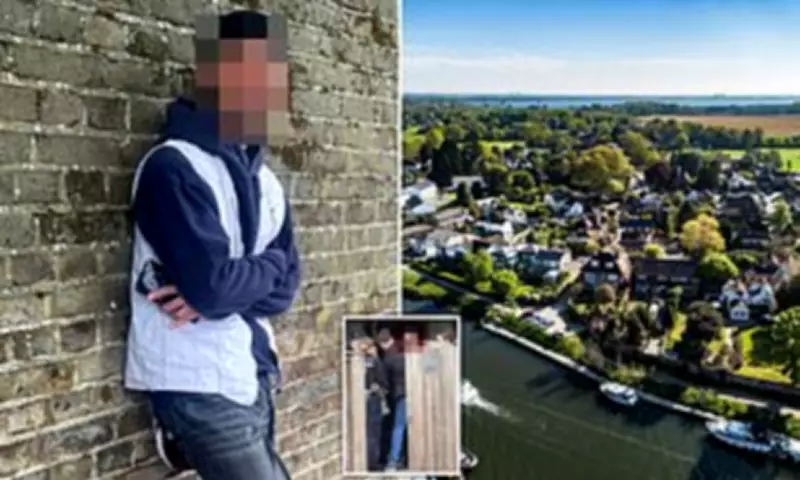
A quiet Surrey street that says everything about where we are
If you want to see what’s gone wrong with immigration and asylum in England, you don’t need a think tank. You just need to stand on a small street in Surrey at school‑run time.
In Laleham, near Staines‑upon‑Thames, a normal three‑bed family home has been turned into a six‑bed HMO and filled with male asylum seekers. It sits just yards from a primary school. Locals were barely told anything. Then one young Afghan man was arrested after allegedly harassing schoolgirls and was later detained under the Mental Health Act.
That single house tells you a lot:
- We’ve gone from asylum seekers in hotels that everyone can see, to smaller HMOs hidden in residential streets.
- Councils and the Home Office keep telling people to calm down, while making decisions behind their backs.
- Parents are being asked to swallow risks they never agreed to.
- The men in the house are the easiest target – even though they didn’t design this system.
I don’t think endless outrage and doom helps anyone. I also don’t think “shut up and be kind” is an answer. There is a better way forward that protects communities, treats genuine refugees decently, and stops burning billions on hotels. But we need to be honest about what’s happening first.
What actually happened on that Surrey street?
Let’s strip this down to basics.
A three‑bed cottage in Laleham was bought, gutted and turned into a six‑room HMO. Six male asylum seekers were placed there under government arrangements. The house is very close to a primary school.
Parents started noticing one young Afghan man hanging around outside the school, allegedly approaching schoolgirls and clashing with mothers. Police were called. He was arrested on suspicion of harassment, then detained under the Mental Health Act – which tells you straight away there is a mental‑health angle here, not just “he’s a wrong ’un, end of story”.
Behind that one front door, three different systems are colliding:
- Building regulations – Did the conversion meet safety standards? Fire doors, alarms, structural changes, that sort of thing. That’s a yes/no technical question.
- HMO rules – Six unrelated adults sharing facilities makes it a House in Multiple Occupation. That should mean licensing, minimum room sizes, proper management and so on.
- Asylum dispersal – The Home Office (or its contractors) uses landlords and companies all over the country to stick asylum seekers wherever there are spare beds.
None of those systems is designed around “Is this wise next to a primary school?” or “Have we explained this properly to the people who live here?” That’s how you end up with a mini‑hostel of six men dropped into a family street, near children, without anyone locally feeling they had a real say.
The first time most people realise what’s going on is when something goes wrong. At that point, everyone blames everyone else and nothing actually changes.
From hotels to HMOs: the real numbers no one talks about
For years we’ve heard about asylum seekers in hotels. Everyone knows it’s expensive. Everyone knows it’s been abused. The government has promised over and over to “end the use of hotels”.
Fine. But if you’re going to complain about the problem, you have to be honest about what the alternative looks like.
Here are the rough numbers:
- Around 30,600 asylum seekers are currently living in hotel accommodation across the UK.
- A property like 4 Shepperton Road in Laleham has been turned into a six‑bed HMO. Six men. One house.
If you use that as your model, how many HMOs would you need to move everyone out of hotels?
- 30,600 divided by 6 = about 5,100 HMOs
That’s the scale. Not “a couple of houses dotted around”. Thousands. If every one of those is a former family house in a normal street, that’s thousands of local flashpoints waiting to happen.
Now think about the value of those homes. If you assume:
- Average house value: £500,000 (which is very realistic in parts of Surrey and the South East)
- 5,000 such houses = £2.5 billion worth of property
That doesn’t mean the government buys them all. In reality, it leases them off landlords and companies. But however you do it, that’s a huge amount of private housing stock effectively repurposed as asylum accommodation, with all the local consequences that come with it.
If you’ve got the feeling your area has been quietly turned into part of this network without you being asked, you’re not imagining it. That’s exactly what’s happening.
Why HMOs next to schools feel like a slap in the face
Most ordinary people I talk to can accept helping people in trouble. What they can’t accept is being treated like an afterthought in their own town.
A six‑man HMO next to a primary school triggers every alarm bell for parents:
- It’s right on your daily route with your kids.
- Nobody clearly explained what it was going to be before people moved in.
- When you ask questions, you get vague reassurances or get told you’re “overreacting”.
Meanwhile, one incident – someone hanging around by the gate, staring, saying something odd to a child – becomes the lightning rod for years of built‑up frustration.
Here’s the ugly truth a lot of people are thinking but not saying out loud:
- A huge hotel with 300 asylum seekers on a dual carriageway is a big, faceless thing. People don’t march down there with pitchforks.
- A terraced house with six men next to your children’s school is very personal, very close, and a much easier target if people finally snap.
That’s exactly what worries me. I don’t want to see anyone attacked – not residents, not asylum seekers, not anyone. But when you park this sort of tension on a normal street, and then tell locals to shut up and be tolerant, you are playing with fire.
Crucially, the six men in that house didn’t create this policy. They’re at the sharp end of it. They’re the ones who will get it first if things boil over, even though all of the big decisions were made far away by people who won’t have to deal with the fallout.
What life actually looks like on their side of the door
A lot of people don’t believe every man living in these houses is “fleeing war”. I understand that. Some clearly aren’t. Some are just trying to get to a richer country whatever it takes. Some have obviously been coached with vague, generic stories.
You don’t have to pretend everyone is an angel to see that the way we treat them once they arrive is a mess.
Look at the basic realities for most people in the asylum system, genuine or not:
- Their lives have already been disrupted enough that they’ve left their country, crossed at least one border and ended up here. That alone tells you life was not stable.
- Most have gone through smugglers or informal routes. That world is built on debt, threats and exploitation. Even economic migrants get abused in that pipeline.
- Once they land in the UK, they’re dumped into a slow system and left in limbo for months or years, banned from normal work and moved around like furniture.
- They get placed into hotels or HMOs in communities they don’t know, in a language they don’t speak well, with almost no support, structure or control over their own lives.
You don’t have to “feel sorry for them” to see what that combination does to people. Young men with nothing to do, no clear future, possible trauma from before they arrived, living in cramped houses with strangers, placed next to schools and families who don’t want them there – of course that is going to throw up bad behaviour, mistrust and fear.
That doesn’t excuse harassment, intimidation or worse. Ever. But it does explain why simply moving thousands of people out of hotels and into HMOs like 4 Shepperton Road is not a serious plan. It just spreads the pressure onto thousands of streets like yours.
The risk of things boiling over – and how we avoid it
Let’s be blunt: people are getting angry now.
You can hear it at the school gates and in the pubs. The pattern is always the same:
- “We were never told this was going to be an asylum house.”
- “We’re being called racist for worrying about our own kids.”
- “If they won’t listen to us, we’ll take matters into our own hands.”
That’s the danger line. And it’s exactly the line we need to pull back from.
You’re never going to see hundreds of people storming a motorway hotel. You can imagine, all too easily, a handful of furious locals confronting six men in a house on their street with no police around. One bad night, one stupid decision, and suddenly everyone’s life is worse – residents and asylum seekers alike.
I’m not writing this to cheer that on. I’m writing this to say: if we don’t fix the policy, that kind of thing becomes more likely, not less.
The answer is not vigilantes at the door. The answer is forcing the people who created this situation to change course.
That means:
- Councils and the Home Office stop quietly dropping asylum HMOs next to primary schools and pretending it’s “nothing to worry about”.
- Residents stop being fobbed off and start demanding clear answers: Who approved this? Is it licensed? How many people? For how long?
- Politicians stop talking in slogans and admit we need a completely different way of handling claims, not just shuffling people from hotels into HMOs.
Which brings me to what I think is a better answer.
A better option: humane processing centres outside the UK
It’s easy to shout about what’s wrong. The real test is: do you have something better to suggest?
Here’s the broad model I’d like to see us move towards:
Instead of dropping people straight into hotels or HMOs all over the UK, we set up properly run processing centres outside the UK in partner countries that agree to host them under a clear legal framework.
The principles are simple:
1. Safe but controlled
People who want to claim asylum in the UK are directed to these centres. They aren’t left drowning in the Channel or crammed into dinghies. They are taken somewhere safe, secure and professionally run.
They live in decent, purpose‑built accommodation – not an overcrowded house in a random village or a Travelodge on the bypass. There are rules, staff on site, and services in place.
2. Fast, fair decisions
Because everything is in one place – accommodation, interview rooms, interpreters, caseworkers, medical staff – claims can be processed far faster than they are now.
- Strong cases are granted quickly. Those people can then come to the UK (or another safe country) with status and a plan, not dumped into a Shepperton Road HMO on day one.
- Weak or bogus cases are refused without letting people embed themselves for years in British communities before anything happens.
So genuine refugees are helped properly. Others are not allowed to turn a broken system into a backdoor route.
3. Medical and mental‑health care where it belongs
The sort of mental‑health issues we’re seeing in cases like Laleham should be picked up and managed inside a controlled centre with proper doctors and support – not left to explode on a suburban pavement.
People get screened, treated and stabilised if they need it, instead of being left to go slowly mad in a bedsit next to someone’s child’s school.
4. Less pressure on British streets and services
Under this model:
- Your village school doesn’t suddenly find itself next to a six‑man HMO full of people no one has properly risk‑assessed.
- Your local GP surgery isn’t flooded overnight because several HMOs have popped up in the area.
- Your council isn’t scrambling after the fact to sort out planning and licensing for conversions that were planned elsewhere.
You can help people without turning every English street into a pressure point.
Is this simple? No. It would need serious treaties, serious oversight, serious money. But it is at least a coherent direction:
- Firm on the rules.
- Decent in how you treat people.
- Honest about the fact that we cannot just keep piling thousands more people into hotels and HMOs and hoping for the best.
What hope actually looks like
Hope, in this situation, isn’t pretending this will all sort itself out. It’s being clear that we do still have choices.
A better system would aim for:
- Less limbo – Cases done in months, not years. Fewer people stuck with nothing to do and nowhere to go.
- Clear outcomes – Strong claims granted and people brought in via proper routes. Weak claims refused before people are embedded here.
- Protected communities – No more HMOs appearing next to schools without anyone being told. Real say for local people.
- Better treatment of genuine refugees – Proper support up front, followed by real integration, instead of leaving people to drift from hotel to HMO to homelessness.
That’s better for the people already here. It’s better for those who have genuinely fled something awful. And it’s better for our sanity as a country.
The choice is not “be cruel” or “be walked over”. The choice is between chaos and order. Right now, we’ve chosen chaos.
We don’t have to stick with it.
Final thoughts: where we go from here
The story of that house in Laleham shows exactly what’s wrong:
- A quiet street.
- A school full of children.
- A house turned into a six‑man HMO for asylum seekers with barely any warning.
- One young man in obvious difficulty acting in a way that frightened parents.
- A system that dumps the fallout on locals and then tells them to stop overreacting.
It’s not “racist” to say this is wrong. It’s honest.
We need to protect our kids. We need to stop spending billions on asylum seekers in hotels. We need to stop turning every other street into an HMO experiment. And we need to treat genuine refugees as humans, not pawns.
The answer is not screaming at the men in that house. The answer is forcing the people in charge to admit the current model has failed and to build a new one based on:
- Processing centres outside the UK
- Fast, fair decisions
- Proper care
- And proper respect for the communities being asked to carry the weight
If you live near one of these houses, or you’re worried your area is next, don’t just rant on social media. Ask direct questions. Demand proper consultation. Push your councillors and MP to stop pretending this is “business as usual”.
We can fix this. But not if we keep pretending that carving up family homes into mini‑hostels on school streets is normal. It isn’t. And it’s okay to say so.