They call them allies – then you find out they armed your enemies
If you grew up in England like I did, you get spoon‑fed a lot of tidy lines about “allies” and “friends”.
We’re told Israel is “our ally”. We’re told Argentina is “our partner” now. We’re told everyone in the “West” is broadly on the same side.
Then you read declassified files and discover that Israel military support to Argentina in 1982 included fighter jets, missiles and intelligence kit that helped attack the Falkland Islands and kill British servicemen. That’s not a conspiracy theory. That’s written down in official papers and confirmed by the Falkland Islands Association and British archives.
Friends don’t arm your enemies.
Knowing that foreign governments were selling weapons to the regime that tried to take that away – and might try again – changes how you see “alliances”.
This is about history, yes. But it’s also about a simple rule for England in the present:
Know your enemies.
Not by what they say about you.
By what they do to you.
What actually happened: Israel’s role in 1982
The Falkland Islands Association article spells it out.
Newly declassified files from the National Archives at Kew show that Israel supplied significant weaponry, including strike aircraft, to the Argentine military junta in the run‑up to, and during, the 1982 Falklands conflict .
That support included:
- Air‑to‑air missiles, missile radar alert systems and large‑capacity fuel tanks for A‑4 Skyhawk aircraft, routed via Peru to disguise the origin. Those fuel tanks gave Argentine jets more time over the islands; the alert systems improved their survivability against British defences.
- A large number of reconditioned Nesher (“Dagger”) fighter jets – the Israeli version of the Dassault Mirage 5 – sold in the 1970s and into the Junta years, plus spare parts and other military materiel.
- Signals intelligence equipment for use on Argentine spy planes, even after the war, despite a personal intervention by UK Foreign Secretary Geoffrey Howe .
All of this sat on top of an estimated US$1 billion in Israeli arms exports to Argentina during the Junta period (1976–83) .
British officials knew. They were “pessimistic” that Israel could be persuaded to stop. They could see the supply lines but couldn’t shut them down.
And we know what those planes and weapons did.
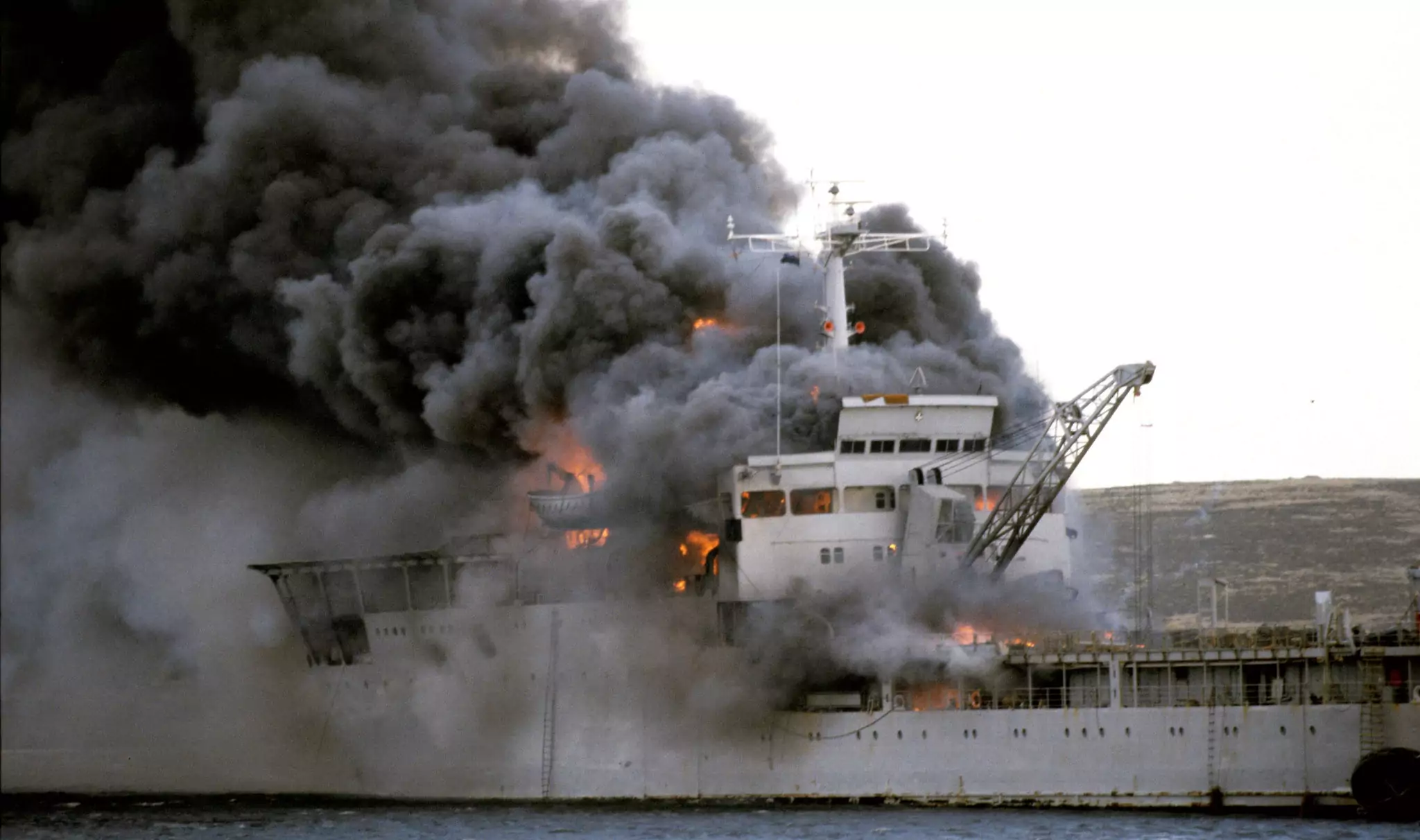
Skyhawks and Daggers flew low‑level attacks on British ships. They sank warships. They killed sailors and soldiers. When you see a grave in a Falklands cemetery, or a name on a memorial, you are looking at the human cost of those weapons.
So when we talk about Israel military support to Argentina in 1982, we’re not talking about theory. We’re talking about metal and explosives that ended British lives.
Why it happened: hatred, ideology and realpolitik
Why did Israel arm Argentina in 1982?
The article gives you some context, and it isn’t flattering.
Menachem Begin, Israel’s Prime Minister at the time, was no Anglophile. He had led the Irgun, a Zionist militant group under the British Mandate in Palestine, and had declared a revolt against British rule in 1944 . Irgun carried out terrorist attacks, including the King David Hotel bombing in 1946 which killed 91 people – British officials, Arabs and Jews alike .
Begin also carried a personal hatred for Britain over the execution of his close friend and Irgun collaborator Dov Gruner in 1947 . These weren’t abstract grievances; they shaped how he saw the UK.
So when Argentina’s anti‑communist junta needed weapons, and Israel saw a chance to:
- Support an anti‑Soviet regime.
- Keep its arms industry humming.
- Stick two fingers up at Britain in the process.
…it wasn’t hard to make that choice.
The relationship was “complex”, as the article politely puts it. Argentina had a sizeable Jewish community, and Israel helped some Jewish families escape during the Junta’s “dirty war” years . At the same time, that same regime was providing a safe haven to Nazis under Perón and had a record of intense anti‑Semitism .
But when push came to shove, realpolitik won. Israel’s wider interests “lay in supporting the anti‑communist regime of the Junta” . That meant arms deals. That meant missiles and jets. That meant fuel tanks over the Falklands.
Again: friends don’t arm your enemies.
Who is to blame: not just Argentina
None of this lets Argentina off the hook.
Argentina invaded the Falklands. It ignored the wishes of the islanders, who wanted to remain British, and sent troops to seize territory that wasn’t theirs. It bears direct responsibility for every British life lost in that war.
But wars don’t happen in a vacuum.
When you look at who armed Argentina – whose kit they flew, whose systems they used, whose industry supplied them – you start to see a wider picture of who acts against British interests.
In this case:
- Israel sold jets and missiles.
- Israel provided radar warning systems and fuel tanks.
- Israel was prepared to sell signals intelligence equipment for Argentine spy planes even after the war, despite direct British lobbying .
- Israeli exports during the Junta period hit around a billion dollars .
British officials saw it, tried a bit of diplomacy, then gave up. UK–Israel relations were already strained over the first Lebanon war; there wasn’t much appetite for a real fight over arms to Argentina.
So when Westminster tells you Israel is a “key ally”, remember this simple fact:
During the Falklands War, Israel military support to Argentina in 1982 made it easier for our enemies to attack and kill our people.
That doesn’t mean “Israel is always the enemy”. It does mean you can’t take “ally” at face value. You have to ask: what have they actually done to us? Not just what they say in speeches.
What a serious country would do
If England took itself seriously as a country, this would be treated as a warning, not brushed under the carpet.
A serious country would:
- Keep a ledger of who arms its enemies. Not just Argentina, but anyone who threatens English lives or territory.
- Adjust foreign policy based on behaviour, not slogans. If a state has a history of supplying weapons used against us, that should affect how we treat their “ally” claims.
- Put clear conditions on defence cooperation. No more “strategic partners” who are free to arm regimes that might take another shot at our territories.
- Use its diplomatic weight to push harder when arms transfers cross the line – not send one letter from a foreign secretary and shrug when it fails.
In the Falklands context, the UK has tried to block Argentine re‑armament since 1982. The article notes that Britain was influential in stopping the sale of Israeli Kfir jets to Argentina due to UK components being involved . Good. But other countries are already lining up to fill the gap .
A serious England would not just worry about who sells jets to Argentina; it would worry about:
- Who is willing to arm regimes that despise us.
- Who treats our dead as collateral damage.
- Who still sees Britain as an old enemy to be scored against when convenient.
That doesn’t mean war with everyone who’s crossed us. It means stopping the fantasy that everyone who says “ally” is on our side.
Know your enemies – and be honest about who sits in the grey zone between friend and foe.
What ordinary people can actually do
You might say: “Fine, but what am I supposed to do about arms deals in 1982?”
You can’t rewrite history. But you can refuse to forget it, and you can use it to challenge the lazy language that keeps us sleepwalking.
A few simple things:
- Know this history. Most people have no idea that Israel military support to Argentina in 1982 included jets, missiles and systems used against British forces. If you mention it, expect blank looks. Change that.
- Challenge politicians when they throw the word “ally” around. Ask: allied in what? Allied when? Allied against whom? If they can’t answer without dodging the bits where “allies” armed our enemies, don’t trust them.
- Support the Falklands’ right to self‑determination. This isn’t just a flag issue. It’s about real people living in a small, remote community that has already survived one war and could, in theory, face pressure again.
- Talk about the Falklands as a place, not just a battlefield. When you tether a story to real streets and faces, it becomes much harder for governments to treat it as a pawn.
- Apply “know your enemies” to other issues. Who sells drones to regimes that want to undermine us? Who funds groups that attack our soldiers abroad? Who runs influence campaigns against us at home? Once you get used to asking those questions, you stop swallowing the PR.
You’re not going to shut down a weapons factory in Tel Aviv or Buenos Aires by yourself. But you can stop letting Westminster pretend this sort of history doesn’t matter.
Know your enemies: why it matters now
This isn’t just about 1982.
The principle carries forward.
There are states today that:
- Vote with us at the UN, then sell weapons to groups that target our troops.
- Sign trade deals, then run information campaigns against our people.
- Call themselves friends, then undermine English interests whenever it suits them.
If you only ever listen to the speeches, you will miss that. That’s deliberate. It’s much easier for Westminster to manage us if we think “ally” means “always on our side”.
The Falklands case – and Israel military support to Argentina in 1982 in particular – is a neat, brutal example of why that’s dangerous. It shows you that:
- A state with a huge, complex relationship to its own Jewish community was willing to arm a regime that harboured Nazis and disappeared Jews .
- A prime minister with a personal hatred of Britain was quite happy to sell kit used against British ships and men .
- Our own government knew and couldn’t or wouldn’t do much about it.
If you pretend that has no bearing on today’s alliances, you’ve learned nothing.
As an English nationalist, my position is simple:
Judge people and states by what they have actually done to England and the English.
Not by what our politicians tell you to feel about them.
Know your enemies. Know your fair‑weather friends. And stop letting either hide behind the word “ally”.
Conclusion: stop believing the PR
When you stand in a Falklands town – you don’t see a war slogan or a football banner. You see people living under a flag they chose, on land they want to keep, with graves that already mark the price of defending it.
Knowing that Israel military support to Argentina in 1982 helped arm the regime that tried to take that away is not a detail. It’s a test.
Friends don’t arm your enemies.
If we keep pretending they do, we deserve what comes next.
So next time you hear a minister or commentator gush about “our allies” or “I’m a proud Zionist” , remember the jets and missiles sold to Argentina. Remember the fuel tanks that gave hostile aircraft more time over the Falklands. Remember that Begin’s hatred of Britain was strong enough that he was happy to see British ships bombed with kit his country supplied.
And ask one blunt question:
Are we going to keep trusting labels, or are we finally going to start tracking actions?
Know your enemies. Know your “allies” who act like enemies when it suits them. And stop letting Westminster feed you a foreign policy fairy tale that gets English people killed and English communities put under threat.
FAQs
Q1: What weapons did Israel supply to Argentina before and during the Falklands War?
Israel supplied air‑to‑air missiles, missile radar warning systems, large‑capacity fuel tanks for A‑4 Skyhawk aircraft, reconditioned Nesher/Dagger fighter jets, spare parts and signals intelligence equipment for Argentine spy planes.
Q2: How much were Israeli arms exports to Argentina worth during the Junta years?
Israeli arms exports to Argentina under the military regime between 1976 and 1983 are estimated at around US$1 billion, according to the Falkland Islands Association report and declassified British documents .
Q3: Why did Israel support Argentina’s military regime despite its treatment of Jews?
The article suggests that during the “dirty war” Israel helped some Jewish families escape but prioritised wider strategic interests, supporting the anti‑communist Junta as part of Cold War realpolitik .
Q4: Did the UK try to stop Israel arming Argentina in 1982?
British officials were aware of Israeli arms supplies and tried to apply diplomatic pressure, including a personal intervention by Foreign Secretary Geoffrey Howe, but they were pessimistic about persuading Israel to stop and the supplies continued.
Q5: How does this history affect how we should see allies today?
It shows that states calling themselves allies may still arm regimes that attack British interests; for English nationalists, it’s a reminder to judge countries by their actions towards England, not by official labels or PR lines.