When a child is tortured and murdered, and the state then hides how it failed her in order to protect the rights of the man who killed her, something has gone very wrong.
In this article, I want to talk plainly about that reality.
I’ve spent almost two decades reading court judgments, government guidance, and “serious case reviews” after child deaths. Over time, you start to see the same pattern: when institutions get it catastrophically wrong, secrecy suddenly becomes “necessary” to protect someone’s rights. And it’s rarely the child’s.
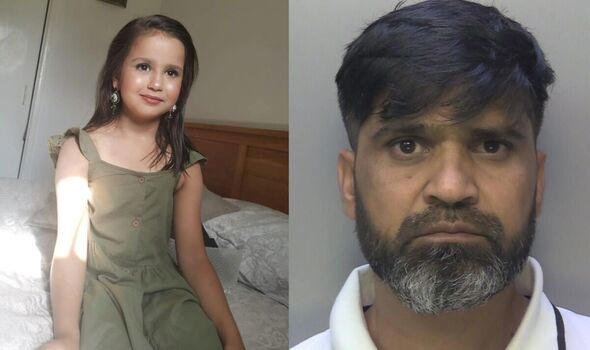
Here, we’re looking at a situation where a convicted killer’s rights are being put ahead of the public’s right to know how a 10‑year‑old girl, Sara Sharif, was left at the mercy of people the system already had reasons to fear.
My promise to you in this piece is simple:
- I’ll explain what this kind of “secret report” actually is.
- I’ll show how we end up in a position where a killer’s rights trump the public’s right to know.
- I’ll share some personal observations from years of watching the same excuses being recycled after every scandal.
- And I’ll outline what needs to change if we’re serious about protecting children, not reputations.
1. A child is dead, and we’re told we can’t be trusted with the truth
Let’s start with the basic moral picture, not the legal jargon.
A child has been killed. The court has found that the abuse was not a one‑off, but a campaign of cruelty. There were warning signs. Professionals knew about domestic abuse. There were multiple contacts between the family and public bodies. A formal review has been carried out into what went wrong.
And then: silence.
We’re told that the findings can’t be released in full because it might infringe the killer’s rights — usually framed in terms of privacy, data protection, or “fairness”. The phrase sounds respectable on the surface. Who could be against rights? Who wants a witch‑hunt?
But hear the underlying message:
- The public who fund these services can’t be trusted with the details.
- The parents who lost their child can’t see exactly how the system failed them.
- Other professionals, who might learn vital lessons, are left with vague bullet points and boilerplate “we must do better” statements.
In other words, the state is effectively saying: We’ll investigate ourselves. We’ll decide what you’re allowed to know. And by the way, the person whose rights matter most in this balancing exercise is the man who murdered the child.
That’s what people mean in plain English when they say a killer’s rights trump the public’s right to know.
I’ve seen this dynamic again and again: not only in child protection, but in policing, health scandals, and failures in prisons. The players change; the script is the same.
2. What is this “secret report” and why does it matter?
Let’s demystify what these reports usually are.
When a child dies or suffers serious harm and abuse is suspected, several things commonly happen:
- A criminal investigation and trial.
- Internal reviews by agencies involved (social care, police, health, school).
- A multi‑agency “serious case review” or similar learning review that looks at the whole story.
These reports typically examine:
- What information different agencies had and when.
- How that information was shared — or not shared.
- What assessments were made, and whether risk was properly understood.
- What decisions the Family Court took, especially around where the child should live and with whom.
- Whether procedures were followed and whether they were adequate in the first place.
In other words, they are the map of how we got from “first concern” to “child dead”.
If you have ever tried to understand how such an obvious tragedy was allowed to unfold, these reports are the missing piece. When they stay locked away, you are left with two useless extremes:
- The raw horror of what happened to the child, stripped of context.
- Vague, politically safe statements like “lessons will be learned” and “processes are being improved” with no detail, no accountability, and no way to check whether anything really changes.
For the public, for journalists, and for campaigners, being denied access to the report means being told: You may mourn, but you may not understand.
For professionals on the front line, it means they are expected to “do better” without seeing the detailed chain of events that led to disaster.
This is why arguments that a killer’s rights matter more than your right to see that report cut so deeply. They’re not just about one document — they’re about whether we’re allowed to look directly at institutional failure.
3. How we end up with a system where a killer’s rights trump the public’s right to know
So how do we reach the point where the rights of a convicted killer seem to outweigh the public’s rights?
A few ingredients combine.
3.1 Legal frameworks used as a shield
Modern public authorities operate within an intricate web of law:
- Data protection and privacy rules.
- Human rights protections like respect for private life.
- Duties of confidentiality.
All of these serve important purposes. We genuinely don’t want states casually dumping personal information into the public domain. But when institutions are embarrassed, those same frameworks can be used very selectively.
The logic often runs like this:
- Publishing detailed criticism of agencies might indirectly reveal private facts about the perpetrator, including information he gave professionals “in confidence”.
- That could be said to interfere with his privacy rights.
- Since his lawyers might make trouble, the safest path is to release as little as possible.
Note what’s missing in that balancing exercise:
- The rights of the child.
- The rights of other children who might be at risk if the system doesn’t truly learn.
- The rights of the public to know if those charged with safeguarding are fit for purpose.
It’s not that the law forces secrecy in these cases. Quite often, the law gives a range of options. Authorities then choose the most restrictive interpretation, and justify it by saying their hands are tied.
3.2 Reputation management dressed up as “rights”
Over the years, I’ve read enough internal documents and statements to spot the pattern.
When a report is damning, three things tend to happen:
- The summary that is published is bland and vague.
- The most serious language (words like “catastrophic failure” or “systemic neglect”) gets softened.
- When questioned, the organisation points to “legal constraints” as the reason for watering everything down.
In reality, there is usually another motive: avoiding public outrage, legal claims, and political fallout.
Invoking a killer’s rights is a convenient way to shut down debate. You’re invited to feel that if you ask for the full report, you’re somehow indifferent to civil liberties. That is emotionally powerful — and deeply misleading.
Civil liberties are not a game where only the worst person in the story gets any protection. The public also has rights. Families of victims have rights. Children currently in danger have rights.
And when those collide, we make a judgment call. Too often, that judgment call is made in a way that protects careers rather than kids.
3.3 The power imbalance no one talks about
There’s another uncomfortable truth.
Ordinary people — including the parents of victims — don’t have the power to fight these decisions easily. Challenging a council, a court, or a national inspectorate on publication is expensive, slow, and emotionally draining.
The perpetrator, by contrast, will often have legal representation already, funded and connected within the system. Authorities fear that he might complain, appeal, or litigate.
So they take the path of least resistance. Once again, what looks like the killer’s rights trumping the public’s right to know is actually the system choosing to avoid the person who might make the most legal noise.
4. Why secrecy is so damaging in cases like Sara Sharif’s
Let’s get concrete about the damage done when reports like this stay in the shadows.
4.1 Families are forced to relive the nightmare without answers
Imagine being Sara’s mother, or any parent in a similar position. You lose your child in the most horrific way possible. You discover that social services, courts, and other professionals had dealings with your ex‑partner and your child before their death.
You then hear that a detailed report exists that explains what they knew, what they did, what they failed to do — but you’re not allowed to see it, or you only get a diluted version.
You’re left with a permanent question:
- Was this tragedy preventable, or was it inevitable?
Without full transparency, that question never really goes away. Grief becomes a loop rather than a journey.
4.2 Front‑line staff get blamed without clarity — or protection
There’s another side people forget: the social workers, teachers, and police officers who genuinely tried to raise the alarm.
In many of these cases, I’ve seen front‑line staff criticised for decisions that were, in reality, constrained by workload, management pressure, or inadequate policies. When reports stay secret, we miss important nuances like:
- A social worker spotted the risk but was overruled by a manager.
- A school reported injuries, but their report was never passed on.
- Police attended incidents but weren’t linked into the child protection system.
When the full narrative stays buried, the public is encouraged to blame “the social worker” or “the teacher”, while senior decision‑makers and faulty structures escape real scrutiny. That helps no one.
4.3 Other children remain at risk from the same failures
The biggest cost of secrecy, though, is always paid by children you’ll never hear about.
When the truth is buried, patterns don’t get fixed:
- Professionals remain confused about thresholds and responsibilities.
- Dangerous parents continue to exploit gaps between agencies.
- The same types of “misjudgement” get repeated.
Public transparency isn’t just about catharsis. It’s about creating pressure that forces change. Without that pressure, internal guidance documents get rewritten, everyone goes on another training course, and the system quietly returns to its previous habits.
That’s how you end up with a long history of cases where, time after time, a killer’s rights seem to matter more than the public’s right to know what went wrong — because the system never fully confronts itself.
5. My personal observations from 19 years watching “lessons will be learned”
After nearly two decades of reading these reports, talking to practitioners, and tracking what actually changes, a few patterns stand out.
5.1 The same “lessons” are written every time
I could almost write sections of some reviews in my sleep:
- “Agencies must improve information sharing.”
- “Professionals should listen more carefully to the voice of the child.”
- “Risk assessments must consider the history of domestic abuse.”
If those sound familiar, it’s because they’re in almost every report about a murdered child from the last 20 years.
The uncomfortable truth is that the problem isn’t ignorance. It’s implementation and accountability. When reports are kept secret, or only summarised in sanitised form, the gap between “what we say we’ve learned” and “what we actually do” widens.
5.2 The culture punishes candour and rewards defensiveness
I’ve seen social workers and doctors privately admit they felt something was wrong in a case, but they were discouraged from being “too negative” or “risk averse”. I’ve read internal emails where managers worry more about media coverage than about whether a child is safe.
When the organisation knows that a full, warts‑and‑all report will never see the light of day, there’s little incentive to change that culture. But when they know every decision could end up being scrutinised by the public, there is a real push to tighten practice.
That’s why the public’s right to know matters so much. It’s not about voyeurism; it’s about creating an environment where doing the right thing is safer than covering your back.
5.3 The “killer’s rights” argument almost never appears in isolation
In my experience, when someone says “We can’t publish this because of the perpetrator’s rights”, it’s rarely the only concern in the room.
Behind closed doors, you’ll hear:
- “This will be politically explosive.”
- “We’ll get hammered in the press.”
- “This could expose us to legal claims.”
I’m not speculating here; I’ve seen the same themes in various sectors. It would be naïve to assume child protection is magically different.
That doesn’t mean everyone involved is acting in bad faith — many are genuinely trying to juggle complex duties. But the effect is the same: the killer’s rights become the fig leaf behind which institutional self‑interest hides.
6. What real accountability would look like
If we’re serious about not repeating these tragedies, we need more than anger. We need a clear picture of what “doing it properly” would look like.
6.1 Publication as the default, not the exception
The starting point should be simple:
- When a child dies due to abuse or neglect and public bodies were involved, a comprehensive report should be published as a default expectation.
Redactions should be tightly justified, not the other way round. That means:
- Removing details that would endanger living children or victims of unrelated crimes.
- Anonymising some personal data where it isn’t essential to understanding what went wrong.
But the core narrative — who knew what, which decisions were taken, and why — should be public.
The target keyword we’re discussing, “When a Killer’s Rights Trump the Public’s”, captures the instinct perfectly: we should be outraged when the system flips that default and chooses secrecy first.
6.2 Independent oversight, not internal marking of homework
Another key step is taking publication decisions away from those who are being criticised.
Right now, in many cases, the very bodies under scrutiny have a huge say in:
- How the report is written.
- What language is used.
- How much is released.
That’s a recipe for soft‑pedalling the truth. Instead, there should be:
- Independent chairs and authors with a legal right to insist on publishing their full findings.
- A clear appeals mechanism where families and the public can challenge secrecy.
- Parliamentary or judicial oversight when authorities insist that a killer’s rights require hiding large chunks of a report.
6.3 Real consequences for repeated failures
Transparency matters, but it’s not enough on its own. When the same types of mistakes keep happening, there must be consequences.
That doesn’t necessarily mean “sack everyone” — that can be a lazy response. But it does mean:
- Professional regulators taking seriously repeated patterns of poor practice.
- Senior leaders losing their positions when they preside over persistent failures.
- Political accountability: ministers and councillors answering to the public in more than words.
If nothing ever really happens to those in charge, the incentive to hide behind the language of a killer’s rights will remain very strong.
7. What you and I can do about it
You might be thinking, “This all sounds right, but what can I actually do?”
More than you might think.
- Use your voice: Whether you’re a writer, campaigner, or just a concerned citizen, keep the focus on the core issue: the public’s right to know how their institutions act in their name, especially when children die. Use phrases like “When a killer’s rights trump the public’s right to know” to name the problem clearly.
- Support families and grassroots groups: Families in these situations often feel isolated and overwhelmed. When their calls for full disclosure are amplified, authorities have a harder time stonewalling.
- Challenge the framing: When officials say “We can’t publish this because of rights,” ask “Whose rights have you weighed, and how?” Press them to explain why the killer’s rights carry more weight than the public’s, or the child’s.
If enough of us refuse to accept the idea that a killer’s rights automatically override everything else, the political cost of hiding reports goes up. And that, ultimately, is what forces systems to change.
Conclusion: refusing to accept that a killer’s rights matter more than our right to the truth
When a 10‑year‑old girl dies at the hands of her own family, the bare minimum we owe her is the truth.
Not a press release. Not a woolly promise that “lessons will be learned”. The truth: who knew what, who failed to act, and how that can be stopped from ever happening again.
If, instead, we accept that a killer’s rights trump the public’s right to know, we send a clear message:
- The system’s comfort matters more than a child’s suffering.
- Protecting institutions matters more than protecting future victims.
- The public who fund and rely on these services are not trusted with reality.
That’s not a message any decent society should be comfortable with.
So here’s my call to action:
Whenever you hear officials invoke privacy, data protection, or “rights” to keep a report about a child’s death secret, don’t shrug and move on. Ask whose rights they’re really protecting. Ask why your right — and mine — to know what was done in our name is being treated as less important than the rights of the person who ended a child’s life.
Because until that changes, we will keep seeing the same headlines, the same apologies, and the same tragedies. And that’s something none of us should accept.
FAQs
1. What does “a killer’s rights trumping the public’s right to know” actually mean?
It describes situations where authorities refuse to publish full reports about institutional failures, arguing that doing so would breach the rights (usually privacy or data protection) of a convicted killer. In practice, it often means protecting the perpetrator’s interests — and the institution’s reputation — at the expense of transparency and public accountability.
2. Why do authorities say they can’t publish these reports?
They typically cite legal duties around privacy, data protection, and confidentiality. Those duties are real, but they have to be balanced against the public interest in transparency. Too often, the balance is struck in a way that favours secrecy, even when redaction and anonymisation could protect individuals while still revealing what went wrong.
3. Doesn’t the killer still have human rights, even after conviction?
Yes. Even convicted criminals retain basic rights, including protection from arbitrary disclosure of deeply personal information. The issue is not whether they have rights, but whether those rights should automatically outweigh the public’s right to know how authorities handled a case where a child was killed. Rights have to be balanced; they’re not a trump card for secrecy.
4. Would publishing full reports put other people at risk?
In most cases, no — not if it’s done properly. Sensitive details can be redacted, and identities can be anonymised. The core facts about who knew what, which decisions were taken, and where the system failed can be shared without exposing living victims or unrelated individuals to danger. The real barrier is usually institutional reluctance, not genuine safety concerns.
5. What changes are needed to stop this happening again?
Key changes include making publication the default after child deaths linked to abuse, creating independent oversight of how reports are written and released, and ensuring there are real consequences for repeated failures. Most importantly, we need a cultural shift where the public’s right to know — and children’s right to be protected — are treated as at least as important as a killer’s rights, not automatically secondary to them.