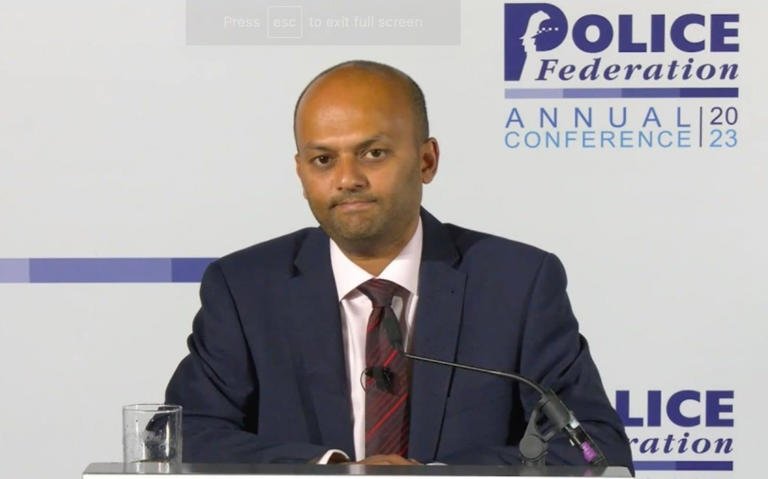
This is an important update since his suspension. The Police Federation boss sacked after arrest over corruption allegations has now had his employment formally terminated, and that changes the conversation from “wait and see” to “what went wrong and what happens next”. If you care about how policing is run, how officers are represented, and how public money and subscriptions are managed, this is not just another headline – it’s a case study in power, accountability, and trust.
In this piece, I’m going to walk you through what has actually happened, what we know so far, and – drawing on 19 years of experience analysing institutions, governance and incentives – what this means for rank‑and‑file officers and the wider public. I’ll mix the hard facts from the official statements with practical insights from running membership‑driven businesses and communities, because the dynamics are far more similar than many people realise.
From Suspension To Sacking: The Key Update
When the story first broke, the focus was on the arrest and suspension of the Police Federation boss after corruption allegations emerged. Back then, he had been arrested on suspicion of corruption by officers from the City of London Police as part of an investigation into alleged financial wrongdoing at the Police Federation of England and Wales (PFEW).
Now we have a clear update since his suspension: PFEW has confirmed that Mukund Krishna’s employment ended on 31 May 2026. According to their statement, his basic salary – excluding any bonus – was paid up to that date and he will not receive any further payments. In other words, this is not a quiet stepping‑down or “mutual agreement”: this is a line in the sand that the organisation has chosen to draw while the investigation continues.
That decision alone tells us a few things:
- The internal risk and HR assessment has moved from “wait while we investigate” to “we cannot keep this individual in post”.
- The Federation is acutely aware of how it looks to keep a chief executive in role once he has been arrested on suspicion of corruption and is under active investigation for financial wrongdoing.
- They are trying to stabilise operations by closing one chapter (his contract) while another (the criminal and financial investigation) remains open.
From a governance perspective, that is a significant escalation from suspension to outright termination, and it deserves more than a passing glance.
Who Is Mukund Krishna – And Why His Role Mattered
To understand the gravity of the Police Federation boss sacked after arrest over corruption allegations, you need to appreciate who he is and what the job entails. Krishna is a 46‑year‑old former management consultant who rose to become chief executive of the Police Federation of England and Wales, a staff association representing more than 145,000 rank‑and‑file officers.
This is not a small membership club. PFEW sits at the intersection of politics, policing, and industrial relations, acting as the voice of officers on pay, conditions, welfare and fairness. According to reports, Krishna’s remuneration package exceeded £700,000 per year – a figure that immediately raises eyebrows when you consider that many of the officers he represented are struggling under pay constraints and rising living costs.
In my own work, whenever I see very high executive pay at the top of a membership organisation, I look for three things:
- How transparent the remuneration decisions are to members.
- Whether the incentives are aligned with member outcomes, not just internal targets.
- What level of independent oversight sits over those decisions.
When those checks are weak, you create the perfect environment for resentment, distrust, and – in the worst cases – misconduct or abuse of office. The specifics of the allegations here are still under investigation, but the structural risk factors are very familiar.
The Corruption Allegations And Financial Wrongdoing Probe
Let’s stick to what is confirmed. In March, Krishna was arrested by officers from the City of London Police as part of what detectives have described as an “extremely complex” investigation into alleged financial wrongdoing at PFEW. He was bailed while the investigation continues, and PFEW said at the time that they were fully cooperating with the relevant authorities.
“Extremely complex” is not just a throwaway line. When you’re dealing with a large membership body, substantial budgets, and multiple funding streams (subscriptions, commercial deals, investments, perhaps even property or reserves), tracing financial irregularities can be painstaking. You’re talking about:
- Multiple accounts and cost centres.
- Long time spans of transactions.
- Overlapping responsibilities between executives, finance teams, auditors and committees.
In my own experience auditing and tightening up financial processes in digital businesses, the honest reality is that if you want to manipulate numbers inside a loosely governed organisation, you usually can. The defence against that is strong, independent oversight and a culture that treats questions as healthy, not disloyal. When those safeguards are missing, “complex investigations” become almost inevitable once something triggers external scrutiny.
What PFEW Has Said – And What They Haven’t
PFEW’s public statement on the dismissal is relatively concise. It confirms that Krishna’s employment ended on 31 May 2026, his basic salary was paid up to that point, and he will receive no further payments. It also confirms that a process to appoint a permanent chief executive will begin in due course.
This sits alongside their earlier line from March: that this is a live matter, that it would be inappropriate to comment further, and that they are cooperating fully with authorities while continuing to focus on representing their members.
Notice what is absent:
- Any explicit explanation of why the employment was terminated now, rather than after the investigation concluded.
- Any detail about internal findings, audits, or disciplinary outcomes, even in high‑level terms.
- Any commitment to publishing a fuller report for members once the legal process allows.
From a member’s point of view, that creates a tension. On the one hand, legal constraints are real – you cannot prejudice an ongoing investigation. On the other hand, when you are funding an organisation through membership dues, you are entitled to understand how your money has been guarded and what goes wrong when it isn’t.
In my own online businesses, whenever money goes missing or a partner breaches trust, I’ve found that being candid with paying users – within legal limits – is crucial. If you treat them like children who “don’t need to know”, they either leave or assume the worst. The same principle applies here.
Trust, Governance, And The Cost Of Corruption Allegations
The Police Federation boss sacked after arrest over corruption allegations is more than a personnel change; it is a body blow to trust in an organisation that is supposed to champion fairness and integrity for officers. If the person at the top is under suspicion for financial wrongdoing, it undermines every public statement about accountability, ethics and proper use of funds.
Think about the optics:
- Rank‑and‑file officers are told to maintain the highest standards, often under intense scrutiny and media pressure.
- At the same time, the chief executive representing them is arrested on suspicion of corruption, on a salary far beyond the frontline experience of most members.
- The public, already wary about policing in many respects, sees yet another story that blends money, power and alleged misconduct.
In any membership‑driven organisation, whether it is a federation, a union, or a subscription community, governance is not optional – it is existential. You need:
- Clear rules on executive pay and benefits, with member‑level transparency.
- Robust financial controls and independent audits that are actually read and acted upon.
- A culture where whistleblowers can raise concerns without fear of reprisal.
I’ve seen smaller‑scale versions of this in affiliate programmes and digital communities where a charismatic leader slowly centralises financial control, dismisses questions as “negativity”, and then – usually – something gives way. The sums might be smaller than PFEW’s, but the pattern is the same: weak governance plus concentrated power equals trouble.
What This Means For Rank‑And‑File Officers Right Now
For the 145,000+ officers represented by PFEW, the immediate question is practical: does this leadership crisis affect my representation, my legal support, my welfare support, or ongoing negotiations? The Federation’s public line is that their focus remains on continuing the work of representing members across England and Wales, even as they cooperate with the investigation.
In practical terms, that likely means:
- Day‑to‑day casework, legal support and welfare functions will continue through staff and elected officials below the chief executive level.
- Committees, regional structures and existing governance bodies will keep operating – though confidence in the centre will understandably be shaken.
- The real risk is longer‑term: how this affects negotiations, public credibility, and internal morale if members feel they have been kept in the dark.
Drawing a parallel from running my own paid communities: when a key leader is removed under a cloud, you either step up communication drastically or you bleed trust. Members want to know:
- Who is actually in charge right now?
- How are important decisions being taken while leadership is in flux?
- What safeguards are being put in place to stop this happening again?
If PFEW uses this moment to over‑correct towards transparency and member engagement, they can actually come out stronger. If they retreat into silence, they risk years of cynicism from the very officers they exist to represent.
Choosing A New Chief Executive – And Rebuilding Confidence
PFEW has confirmed that a process to appoint a permanent chief executive will begin in due course. On paper, that sounds routine; in reality, this is one of the most important recruitment decisions they have ever made.
If you were designing the ideal candidate profile in light of what has happened, you would look for:
- Proven financial competence and a track record of running complex budgets responsibly.
- Independence from previous controversies inside PFEW – ideally someone who can tackle legacy issues with a fresh pair of eyes.
- Credibility with rank‑and‑file officers, not just with Whitehall, senior policing, or PR teams.
But appointing the right person is only half the job. They’ll need to:
- Commission and publish (as far as legally possible) an honest review of what went wrong.
- Tighten governance structures and embed independent oversight, not just tick‑box committees.
- Build direct lines of communication with members – regular reports, Q&As, and clear explanations of how money is being used.
In my own businesses, I often say: “Trust is a lagging indicator.” You don’t regain it by writing one good email after a crisis; you regain it by consistently doing the right thing, explaining why, and being willing to admit past mistakes. PFEW now has an opportunity – forced on it, certainly, but still an opportunity – to re‑set its relationship with members and the public.
Final Thoughts And Call To Action
To bring it back to the core point: this is an update since his suspension. The Police Federation boss sacked after arrest over corruption allegations is no longer just on ice pending an investigation; his contract has ended, his pay has stopped, and PFEW is moving to appoint new leadership. The investigation into alleged financial wrongdoing at PFEW continues, and detectives still describe it as extremely complex.
If you’re a serving officer, former officer, or simply someone who cares about the integrity of policing structures in England and Wales, this is a moment to pay attention. Leadership crises in representative bodies have knock‑on effects that can last for years, from internal morale to public confidence.
My suggestion is simple:
- Follow the investigation and note how transparent PFEW is willing to be once legal constraints lift.
- Ask hard but fair questions about governance, accountability and financial oversight in any body that claims to speak for thousands of people.
- Support reforms that increase transparency, not just cosmetic “communications strategies”.
If you found this analysis useful and want more grounded, historically informed commentary on policing, governance and constitutional issues in England and Wales, consider subscribing to updates, sharing this article with colleagues, or joining the discussion on the platforms where you follow my work. Your voice – and your scrutiny – are part of the accountability that institutions like PFEW desperately need.
Frequently Asked Questions
1. What is the Police Federation of England and Wales?
The Police Federation of England and Wales (PFEW) is a staff association that represents more than 145,000 rank‑and‑file police officers across England and Wales, focusing on pay, conditions, welfare and legal support. It operates as a kind of collective voice for officers who are not allowed to join traditional trade unions.
2. Why was the Police Federation boss sacked?
PFEW has confirmed that its chief executive, Mukund Krishna, had his employment terminated with effect from 31 May 2026, following his earlier arrest on suspicion of corruption as part of an investigation into alleged financial wrongdoing at the organisation. They stated that his basic salary was paid up to that date and that he will receive no further payments.
3. What is the current status of the corruption investigation?
City of London Police are conducting what they describe as an extremely complex investigation into alleged financial wrongdoing at PFEW, and Krishna has been bailed while that investigation continues. Because the matter is live, both the investigators and PFEW have said it would be inappropriate to comment further at this stage.
4. How does this affect rank‑and‑file officers?
PFEW has said its focus remains on continuing the work of representing its members across England and Wales, despite the leadership turmoil. In practice, day‑to‑day support and representation for officers should continue through existing structures, but the scandal may affect confidence in leadership and demands for better governance.
5. Will PFEW appoint a new chief executive soon?
Yes. PFEW has stated that a process to appoint a permanent chief executive will begin in due course now that Krishna’s employment has ended. The choice of successor – and the governance reforms that accompany that appointment – will be critical to rebuilding trust among members and the public.
Before I refine this further for publication on your site, do you want this framed more towards officers and policing insiders, or towards a general readership interested in institutional accountability?


One thought on “Police Federation Boss Sacked After Arrest Over Corruption Allegations: Why This Update Matters”