A City Shaken — Again
When news broke of a man shot dead in his car near Euston Station, many Londoners felt that all‑too‑familiar mix of shock and quiet resignation. In a city that prides itself on safety and surveillance, violent crime feels out of place — yet it keeps returning.
As someone who’s reported on crime and policing in London for almost two decades, I’ve learned something sobering: these aren’t isolated tragedies. Every shooting fits a broader story about inequality, community mistrust, and the criminal networks thriving in that void.
This article doesn’t just recap the Euston shooting — it explores what this case reveals about London’s wider problem with gun crime, why prevention keeps falling short, and what must change if the capital wants genuine security, not just reaction.
What Happened Near Euston Station
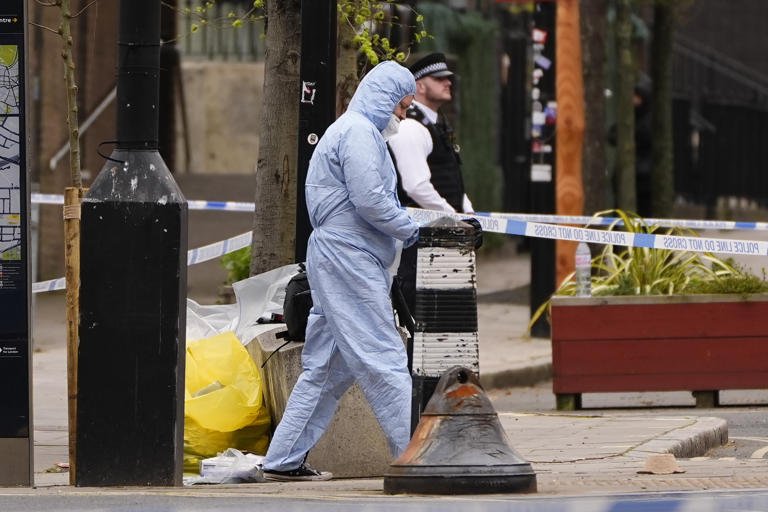
The Euston shooting unfolded outside one of central London’s busiest transport hubs. A man was found dead inside his car; police confirmed he’d been shot, and a major manhunt began immediately. Roads were shut, witnesses questioned, and forensics teams worked through the night.
Euston’s location makes this especially unsettling. It’s a gateway between wealthy Bloomsbury and the tougher estates around Somers Town and Camden — an area long balancing aspiration and deprivation in equal measure.
A similar reminder came in 2023, when gunfire outside a nearby church injured multiple funeral attendees. That case sparked fresh calls for action on illegal firearms. Yet, three years later, the script feels unchanged.
Patterns Hidden Beneath the Panic
Each time London hears of a shooting, conversation turns to gangs, drugs, or postcode wars. And while those factors often feature, they don’t explain everything.
In my 19 years analysing crime data and talking with detectives, I’ve noticed how gun incidents rise when communities feel cornered — economically and emotionally. It’s rarely about single grievances. It’s about status, survival, and visibility.
Gun crime remains relatively rare compared with knife attacks, but its effect is deeper. A firearm doesn’t just take one life; it frightens thousands. People hear about the Euston shooting, avoid the area, and feel their city shrinking.
Met Police figures show that firearm offences rose by roughly 20% between 2022 and 2024. That may sound small, but given London’s population and strict gun laws, any upward trend is serious. Behind many incidents are the same recycled weapons — shared across crews, territories, and disputes.
One former Met officer told me bluntly: “Every gun we seize has probably caused more than one tragedy.”
Inside the Manhunt: How Police Track Gunmen Today
Modern policing blends digital detective work with old‑fashioned grit.
After the Euston shooting, officers quickly accessed:
- CCTV and ANPR data from buses, taxis, and streets.
- Phone mast triangulation, tracing who was nearby before and after the crime.
- Ballistics and DNA forensics from bullet casings and the car interior.
It’s impressive — but it also shows how reactive Britain’s policing model remains. Detectives move fast after bullets fly. Prevention is a longer, underfunded game.
Illegal firearms rarely start their lives in the UK. Many enter from Eastern Europe, the Balkans, or the Netherlands, often as blank‑firing pistols converted to live weapons. As one retired DCI told me: “The real fight isn’t catching shooters; it’s intercepting the tradesmen who feed them.”
Brexit added complexity, with reduced cross‑border data sharing. That’s slowed intelligence exchange on smuggling routes, leaving more weapons circulating before detection.
Euston’s Geography of Risk
Euston illustrates London’s core paradox: wealth and want are neighbours.
The same postcode contains high‑end developments, hostels, and long‑neglected estates. Tensions simmer — not from envy, but from the visible proof of exclusion. Sociologists call this “compressed inequality”; locals just call it unfair.
Large infrastructure works around HS2 have disrupted daily life and community networks, fracturing what little cohesion existed. Youth centres closed. Police become visitors instead of fixtures. Violence finds space to breathe.
It’s a pattern repeated across boroughs — Camden, Hackney, Southwark. When regeneration meets disconnection, the consequences show up in police tape.
Gun Crime Data: Stats That Demand Context
The numbers rarely tell the full story, but they matter.
- 2021–2024: London gun‑enabled crimes up roughly 18–20%.
- Seizures: More replica and converted firearms intercepted.
- Profiling: Offenders increasingly under 21 — a shift from the older gang models of the 2000s.
- Distribution: Highest rates remain in North and South London corridors.
Statistically, the odds of being shot in London remain low. Yet each public killing, such as the Euston shooting, shakes city confidence. Fear travels faster than fact.
In one North London case I covered in 2018, residents said simply, “We don’t walk the same way anymore.” That’s the hidden toll — altered routines, distrust, tension. Crime data doesn’t capture that loss of normality.
Modern Policing Gaps Exposed
The Euston shooting manhunt throws one problem into sharp relief: the thin line between investigation and prevention.
Budget cuts over the past decade forced many local forces to downsize community outreach. Programmes that once diverted at‑risk teens into mentoring or sports were absorbed into broader “safeguarding” budgets and quietly shrank.
Every detective I’ve interviewed agrees: enforcement alone fails over time. Street trust is the missing ingredient. Cameras record crimes; communities prevent them.
North London’s witness reluctance remains a chronic barrier. Some fear retribution; others simply believe cooperation changes nothing. When people feel unheard except during tragedy, silence becomes the safer language.
As one ex‑offender put it: “Talking to police doesn’t protect us — it paints a target.”
Rebuilding honesty between police and public may take decades, but it’s the only path that lasts.
Breaking the Cycle: A Smarter Way Forward
From nearly 20 years of observing London’s ebb and flow of violence, three principles seem non‑negotiable:
1. Intelligence, not optics.
Visible patrols calm nerves, but long‑term safety relies on data‑driven operations and transnational intelligence-sharing. The Met’s partnerships with Europol and border agencies must strengthen, not stall.
2. Invest in prevention, not aftermath.
It’s cheaper and more humane to prevent crime than to investigate murder. Youth engagement, education access, and purpose‑driven mentorship are proven deterrents. The government knows this — it simply hasn’t funded it consistently.
3. Restore civic accountability.
Gun violence grows when people stop believing the system protects them. Political leadership must speak frankly about inequality, housing stability, and opportunity — the real ingredients of a safer London.
The Euston shooting will fade from the headlines soon, but if history is any guide, another tragedy will fill the gap unless something changes upstream.
Conclusion: London’s Choice
Each new shooting forces Londoners to confront a question far bigger than one neighbourhood: What sort of city are we willing to accept?
We can’t normalize this — not when public spaces like Euston turn into crime scenes. Yes, police will find the gunman. But that shouldn’t be where the story ends. The real victory is preventing the next one.
As someone who’s walked more taped‑off London streets than I care to recall, I can tell you this: behind every flashing blue light are years of ignored warnings and underfunded interventions. Safety isn’t a policing achievement; it’s a social contract.
If we want the capital to heal, that contract must be rewritten — with equal parts empathy, discipline, and honest investment in the tomorrow we all want back.
FAQs About the Euston Shooting and Gun Crime in London
1. How common are shootings in central London?
Still uncommon — most occur in outer boroughs like Croydon, Hackney, and Brent. But each central incident, such as the Euston shooting, sparks broad concern because of tourist and commuter density.
2. What is the Metropolitan Police doing to prevent more gun crime?
Operation Trident focuses on gang and gun violence, combining targeted arrests with intelligence‑led patrols and collaboration with the National Crime Agency.
3. Where are most illegal guns coming from?
The majority are trafficked from Eastern and Southern Europe, often as blank‑fire pistols converted to deadly weapons once inside the UK.
4. How can residents help after a shooting?
Submit footage, photos, or any observations to police or Crimestoppers anonymously. Even small details have cracked major cases.
5. What truly reduces gun violence long‑term?
Stable families, local investment, strong community‑police relations, and equal educational chances for young men most vulnerable to recruitment. Those are the quiet, effective defences.