The £15 Billion Wake‑Up Call
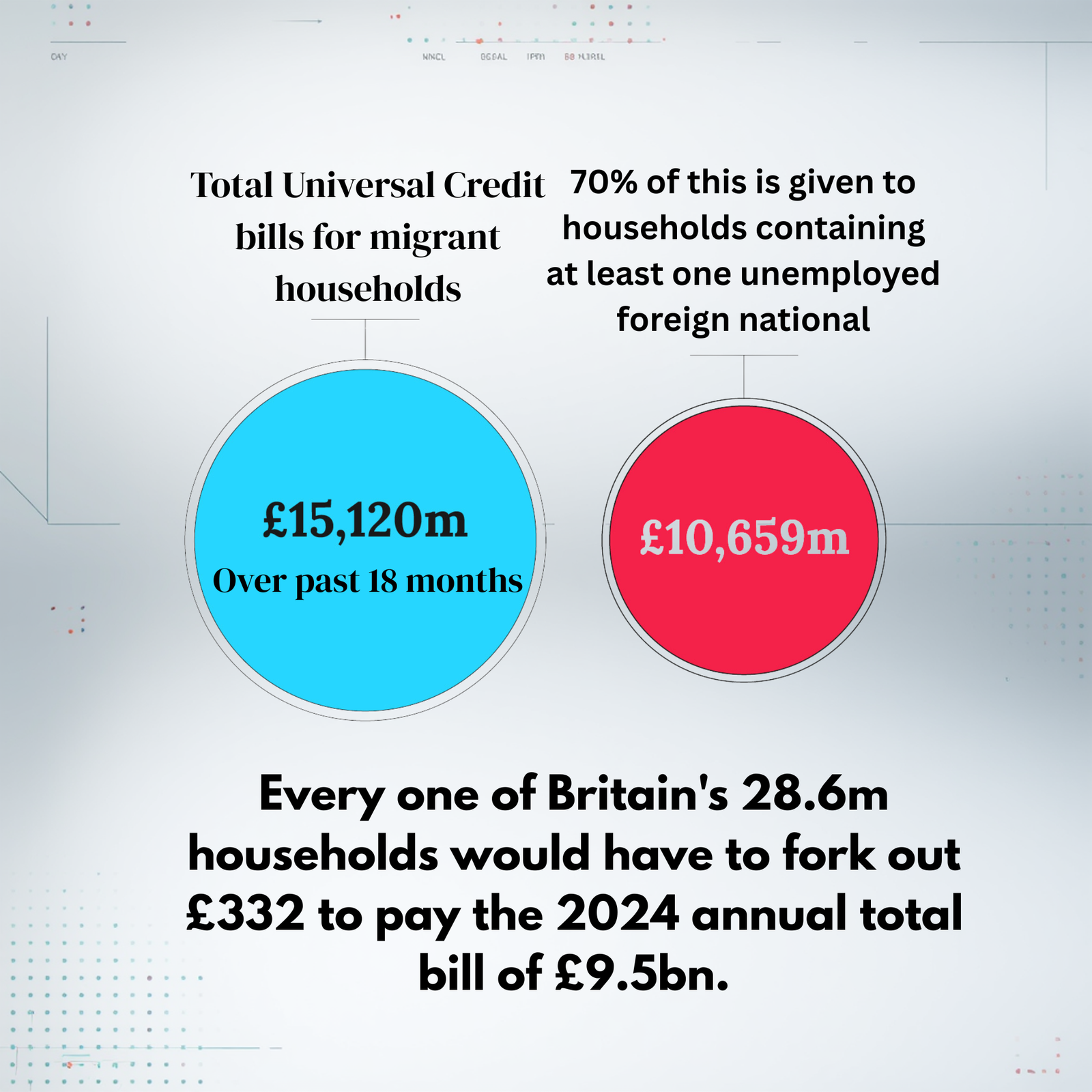
“More than £15 billion of benefits given to migrant households in just 18 months.” It’s the kind of headline that makes people spit out their morning coffee, share the link in WhatsApp groups, and ask a simple question: how on earth is this sustainable?
If you’ve been following my work, you’ll know I wrote last week about a £16 billion black hole in our public finances and how much of it traces back to asylum and migration‑related overspends. This new “£15 billion of benefits given to migrant households” story feels like another piece of the same puzzle. In this article I want to strip out the spin, explain what these numbers actually mean, link them to that black hole, and talk honestly about what needs to change.
What the “£15 Billion of Benefits Given to Migrant Households” Really Means
Headlines talk about more than £15 billion of benefits given to migrant households, but the detail usually sits in the small print. We’re not talking about people who just stepped off a boat yesterday and immediately started drawing benefits. The main source is government data obtained through freedom of information requests to the Department for Work and Pensions, covering households where at least one adult is a foreign national.
Those households receive support through Universal Credit, housing benefit, pension credit and related payments, on the same terms as British citizens once they have refugee status, humanitarian protection or indefinite leave to remain. One analysis showed households with at least one foreign national receiving around £941 million in Universal Credit in March 2025 alone—almost double the £461 million reported in March 2022. Scaled across many months, that’s where you get the eye‑catching headline about more than £15 billion of benefits given to migrant households.
From a data point of view, that phrase bundles together a lot of different situations: refugees fleeing war, long‑term residents who have contributed for years but lost a job, and recent arrivals who have just secured legal status and are still finding their feet. Lumping them all into one bucket labelled “migrants on benefits” is brilliant for clicks, but not so good if you actually want to fix the underlying problem.
The Numbers Behind the Shock: Doubling Bills and Missing Context
Let’s get specific. The FOI‑based figures and newspaper reports give us a few key reference points:
- Around £941 million per month in Universal Credit to households with at least one foreign national in March 2025.
- That’s nearly double the £461 million per month reported three years earlier.
- One analysis suggested over 1 million foreign nationals now claim some form of benefit, including Universal Credit and related support.
- Internal data cited by some outlets indicated more than £10bn of Universal Credit in a single year going to non‑UK or Irish citizens.
Stack those points up and it’s not hard to see how commentators arrive at the “more than £15 billion of benefits given to migrant households” line over an 18‑month period. But raw totals without context can mislead. Benefits spending has jumped for British households too, because living costs are up and more people are on Universal Credit across the board.
We also have experts pointing out that migrants can have a positive fiscal impact in their early working years and that benefits are just one part of a much bigger tax‑and‑spend equation. The awkward truth is that very few official publications give you the whole story in one place. Instead, you get scatterings of FOI responses, think‑tank reports and politically‑charged articles that each shine a torch on one corner of the room.
From £15 Billion of Benefits to a £16 Billion Black Hole
Now let’s link this to the “£16 billion black hole” I wrote about last week. One of the most authoritative pieces of work on this comes from the Institute for Fiscal Studies, which looked at the Home Office’s budgeting for asylum and illegal migration. Between 2021–22 and 2023–24, the Home Office initially planned to spend a net £320 million on asylum, border, visa and passport operations, but actually spent around £7.9 billion. That’s an overspend of roughly £7.6 billion in just three years.
On top of that, the new Chancellor’s audit identified around £6.4 billion of additional spending pressures in a single year related to asylum and illegal migration, contributing to a much larger gap often described as a “black hole” in the public finances. Add in pay settlements and other commitments and you get close to the £16 billion figure I highlighted.
Now drop the benefits headline into that picture. If more than £15 billion of benefits given to migrant households over 18 months is accurate, and if asylum and migration‑related operational costs are overshooting by billions as well, you start to see a pattern. We don’t just have a benefits issue or a hotels issue or a legal‑aid issue—we have a system that was designed for much lower volumes and shorter decision times. When you run high net migration, slow asylum processing and a generous welfare safety net alongside each other, you shouldn’t be surprised when the bill explodes.
From my perspective, the shocking thing isn’t that the bill is high; it’s that nobody in government levelled with the public earlier. We only seem to learn the true scale when FOI requests, watchdogs and think‑tanks piece it together after the damage is done.
Who’s Actually Responsible: Policy Failure vs. Migrant Families
When you read phrases like “conveyor belt to a life on benefits,” it’s easy to blame the people receiving the payments. But step back and ask: who wrote the rules, issued the visas, and allowed asylum backlogs to spiral to the point where people sit in limbo for years, unable to work, and inevitably drifting onto state support?
The truth is that multiple governments have pursued an economic model that leans heavily on imported labour—often at the lower‑wage end—while letting housing, public services and welfare systems creak under the strain. At the same time, they tightened domestic training and squeezed local authorities, so there’s no resilience when numbers rise. In that environment, is it any wonder that more than £15 billion of benefits given to migrant households has become politically explosive? The groundwork was laid years ago.
I’ve seen this pattern again and again in other sectors I write about: short‑term fixes that look cheap on a spreadsheet end up costing far more later. Think about using cheap agency staff instead of building a stable workforce, or ignoring housing shortages while driving up population. The bill always shows up eventually—it’s just that by the time it does, the politicians who made the decisions are usually in another job.
What Politicians Don’t Tell You About Migrant Benefits and the Black Hole
Another uncomfortable reality: the government doesn’t publish a single, transparent dataset that shows, in one place, how much migrants as a whole cost or contribute once you combine taxes, benefits, and public service use. So we end up with rival narratives. One side shouts about more than £15 billion of benefits given to migrant households, the other says migrants are net contributors and accuse critics of scaremongering.
Fact‑checking organisations have already had to correct or clarify some of the wilder claims. For instance, a previous Daily Mail report mis‑framed a huge “£234 billion” as if it were purely about benefits, when in reality it was a much broader speculative estimate of lifetime fiscal costs that was later withdrawn. We’re told that benefits are only a fraction of that figure, but not given a precise breakdown. The numbers about £941 million per month and “one in six pounds of Universal Credit going to foreigners” are real, but they still sit in isolation.
From a trust point of view, this is toxic. Ordinary people shouldn’t have to wade through FOIs, PDFs and specialist blogs to know where their money goes. Whether you think migration levels are too high or just right, you should at least be able to see clear, consistent numbers: tax paid, benefits received, services used, and how that compares to UK‑born citizens over time. Until that happens, arguments about the £16 billion black hole and the £15 billion of benefits given to migrant households will remain polarised rather than productive.
Fixing the System: Beyond Outrage and Into Solutions
So what do we do instead of just rage‑sharing headlines? Here are a few practical moves that would actually make a difference to both the £16 billion black hole and the more than £15 billion of benefits given to migrant households:
- Speed up asylum decisions: The longer people are kept in limbo, the more they cost in accommodation and benefits; faster, fairer processing would drastically cut the bill and let people either work or be removed, rather than sit idle.
- Enforce a real “contribution first” principle: Tighten the rules so that long‑term access to non‑emergency benefits depends on a clear record of work and tax contributions, with sensible exceptions for genuine refugees and those who physically cannot work.
- Align migration policy with housing and services: If net migration remains high, investment in housing, schools, NHS capacity and local government support must rise with it, rather than being treated as separate conversations.
- Publish full migration accounts annually: A legally‑required, independent report combining tax, welfare, and key service costs for migrants vs. UK‑born residents would end the data fog and stop both sides cherry‑picking numbers.
As someone who spends a lot of time digging into this stuff for a living, I’m convinced the real divide isn’t between “pro‑migrant” and “anti‑migrant” camps; it’s between people who are prepared to look at the full balance sheet and people who just want a headline that confirms their prior beliefs.
Conclusion: Don’t Just Read the Headline – Demand the Whole Ledger
The headline about more than £15 billion of benefits given to migrant households in 18 months taps into a very real anxiety about fairness and sustainability. When you set it alongside a £16 billion black hole shaped in large part by asylum and migration‑related overspends, that anxiety only grows. But numbers without context can be weaponised in any direction.
My view, after ten years of watching these rows come and go, is that we don’t fix this by shouting at migrant families or pretending there isn’t a problem. We fix it by forcing politicians to join up policy, speed up decisions, and finally publish an honest, comprehensive set of figures on costs and contributions. If you’ve read this far, my call to action is simple: next time you see a viral headline, ask where the underlying data is, who’s paying attention to the overspends, and whether anyone in power is prepared to show you the whole ledger—not just the parts that suit their party line.
FAQs
1. What does “more than £15 billion of benefits given to migrant households” actually cover?
It refers mainly to Universal Credit and related payments made to households where at least one adult is a foreign national with legal status—refugee, ILR, or similar—over roughly an 18‑month period.
2. Are migrants getting special benefits that British citizens can’t claim?
No. Once migrants obtain refugee status, humanitarian protection or indefinite leave to remain, they access benefits under broadly the same rules as UK citizens, though there are complex residency and status tests.
3. How does this link to the £16 billion ‘black hole’ you mentioned before?
Asylum and illegal migration overspends—running into several billions—sit alongside the benefits bill to migrant households, creating a combined pressure on public finances that feeds into the wider gap between spending plans and reality.
4. Would stopping benefits for migrant households fix the public finance problem?
Not on its own. Migrant benefits are only one part of a bigger fiscal picture that includes pay deals, defence, support for Ukraine, and domestic welfare costs, plus the taxes migrants pay back into the system.
5. Why doesn’t the government publish clearer data on migrant costs and contributions?
Currently, most detailed figures come via FOIs, one‑off reports and fact‑checks; there’s no single annual “migration balance sheet”, which makes it easier for different sides to cherry‑pick numbers for their own arguments.
3 thoughts on ““More Than £15 Billion of Benefits Given to Migrant Households – Are We Ignoring a Growing Black Hole in Public Finances?””