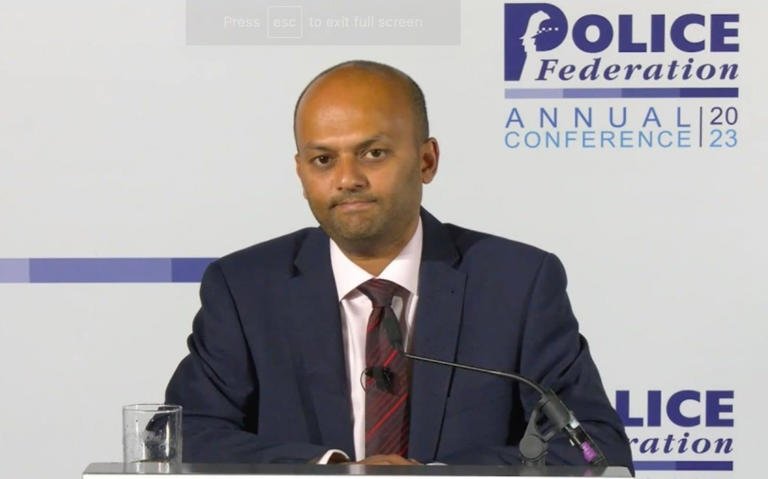
When you see a headline about a Police Federation boss on a six‑figure package being arrested over fraud allegations, it’s tempting to shrug and file it under “yet another scandal”. But the current Police Federation boss fraud allegations go to the heart of trust in policing, how officers’ money is managed, and how much scrutiny we really have over the people who speak in the name of frontline cops.
In this article, I want to unpack what’s known so far, explain why this isn’t just a one‑off drama, and share practical ideas for what should change next so that members and the public aren’t left relying on blind faith.
What Actually Happened – The Arrests And The £700,000 Question
Reports this week say that three men connected to the Police Federation of England and Wales have been arrested on suspicion of fraud by abuse of position. Among them is the chief executive of the Federation, described widely as a Police Federation boss whose total pay package is around £700,000 a year. The arrests involve individuals from Surrey, Wales and Bristol, and relate to allegations of financial wrongdoing linked to the national Federation.
At the time of writing, these are allegations, not proven facts in court. The men have been arrested, questioned, and released while investigations continue, and they are entitled to the presumption of innocence. But it’s understandable that the combination of a very high salary, the phrase “fraud by abuse of position”, and the words “Police Federation boss” in one headline has cut through with the public.
The Police Federation has confirmed that it is cooperating with the investigation into allegations involving individuals linked to the organisation. For members, that raises an immediate and very human question: “Is the subscription money I’ve been paying each month being handled properly?” For the wider public, the question is simpler: “If we can’t trust the people representing police officers to handle their own finances correctly, who can we trust?”
Who And What Is The Police Federation – And Why Their Integrity Matters
The Police Federation of England and Wales (PFEW) is the statutory staff association representing more than 100,000 rank‑and‑file officers, from constable to chief inspector. It’s not quite a union in the full legal sense, but in practice it plays a similar role: negotiating on pay and conditions, representing officers in disputes, and acting as a powerful lobbying voice on policing policy.
Members fund the Police Federation through monthly subscriptions, which means it is literally built on officers’ money. That gives senior figures in the organisation a serious responsibility to treat those funds with care, transparency and humility. When the public hears that a Police Federation boss is on a total package approaching £700,000, it naturally prompts questions about whether that reflects frontline realities – especially at a time when officers are highlighting pay pressures and rising workloads.
The Federation has experienced turbulence before. Past reports have highlighted criticism over spending, internal infighting and accounting practices, to the point where a former Home Secretary even floated the idea of dismantling the body entirely. That doesn’t mean the current allegations are proven or that the Federation doesn’t do valuable work, but it does mean there is existing scepticism that new headlines tap straight back into.
Fraud Allegations In Police Bodies Are Not New – A Pattern Emerging?
The current Police Federation boss fraud allegations are not happening in a vacuum. In recent months, a former West Mercia Police Federation secretary, Jamie Harrison, was convicted of 15 counts of fraud by abuse of position, after using colleagues’ money to fund personal holidays, meals and entertainment. He repeatedly dipped into Federation petty cash that he controlled, keeping many claims under £100 to avoid detection, and even manipulated timesheets to get paid for days he didn’t work.
Earlier, the former vice‑chair of the national Police Federation faced gross misconduct proceedings over an alleged £1 million transfer of funds from the Federation to a charity for which he was a trustee. In that case, prosecutors said there wasn’t enough evidence to bring criminal charges, but the Independent Office for Police Conduct still referred him to misconduct hearings.
When you line up these stories – an ex‑secretary convicted of fraud, a former vice‑chair facing questions over a £1m transfer, and now a Police Federation boss arrested over serious fraud allegations – it’s hard not to see a pattern. From my own experience working with member‑funded organisations, single “rogue” cases are often symptoms of a more basic problem: weak systems, poor oversight, and a culture where challenging how money is spent is seen as disloyal.
The Real Issue – Governance, Oversight And Culture Inside The Federation
Whenever you see words like “fraud by abuse of position”, the key word for me is “position”. The individuals accused were able to act because they held roles that gave them control or influence over funds, processes or sign‑offs inside the Federation. The spotlight should therefore fall on three things: governance, oversight and culture.
Governance is about who decides what, and under what rules. In any healthy member organisation, you expect clear financial policies, separation of duties (no one person should be able to authorise, pay and reconcile the same expenditure), and regular independent audits whose findings are shared with members. Oversight means those audits are taken seriously and that there are real consequences when red flags appear – not polite notes filed in a drawer.
Culture is the hardest bit. In my own projects, I’ve seen how easy it is for a small “trusted inner circle” to end up treating organisational money as something they have informal discretion over, rather than hard‑earned funds that need to be justified to the people who paid in. That culture is exactly what led Harrison to feel comfortable dipping into petty cash for holidays and luxury hotels, until auditors finally stepped in.
The details of the current Police Federation boss fraud allegations will take time to emerge, but the risk factors are familiar: high concentrations of power in senior roles, historically patchy financial controls, and a membership that often feels too busy or too distant from HQ to engage with governance questions.
Why The Police Federation Boss Fraud Allegations Hit A Nerve With The Public
If you step back and look at this story through the eyes of someone outside policing, three elements jump out immediately: the job title, the pay, and the charge. “Police Federation boss” signals influence and status, “on £700,000” signals a level of reward far beyond what frontline officers or most public servants see, and “fraud by abuse of position” suggests using a trusted role for personal or improper gain.
Tie that to a wider backdrop: a cost of living squeeze, long‑running debates over police pay and conditions, and multiple stories about misconduct and corruption in different parts of the justice system. Against that context, the Police Federation boss fraud allegations don’t feel like a technical accounting dispute; they feel like another example of “one set of rules for them, another for the rest of us”.
From conversations I’ve had with officers over the years, there is often a quiet resentment about how remote and well‑resourced the top of the Federation looks compared with the daily realities on the street. When those same officers read that the person leading their organisation is earning a huge salary and then see that same person’s name linked to fraud allegations, it hits far harder than yet another politician’s expenses story.
What Needs To Change Now – Concrete Reforms, Not Just “Lessons Learned”
If the response to the Police Federation boss fraud allegations is just a few carefully worded statements and a promise to “review governance”, nothing meaningful will change. The Federation and those who oversee it need to move from damage limitation to serious reform. There are several concrete steps that would make a real difference.
First, full transparency on senior pay and benefits, not just vague ranges. Members and the public should be able to see exactly what the Police Federation boss is paid, how that package is structured, and what performance or value‑for‑money measures exist. Second, truly independent annual audits with summaries published in accessible language, highlighting any concerns and how they are being addressed. Third, tighter controls around expenses and petty cash: mandatory receipts, dual authorisation for spending above low thresholds, and routine sampling of claims for deeper checks.
There is also a strong case for term limits or at least regular re‑confirmation votes for top roles, so that no single figure becomes “untouchable”. From my own practice, one of the simplest changes that improved accountability was introducing member‑elected finance committees who could question spending plans before money went out of the door, rather than members only hearing about it after something went wrong.
How The Public And Rank‑And‑File Officers Should Read These Stories
It’s important to keep two ideas in your head at once. On the one hand, the individuals caught up in the Police Federation boss fraud allegations have not yet been found guilty of anything in court, and they are entitled to the same presumption of innocence as anyone else. On the other hand, the pattern of past cases shows that financial abuse has happened in Federation contexts before, and ignoring that would be naïve.
If you are a serving officer and Federation member, this is a moment to engage, not disengage. That might mean asking to see the latest accounts, questioning how salaries and expenses are set, or standing for internal roles where you can influence governance. I’ve seen organisations transform simply because ordinary members started attending AGMs, asking awkward questions, and insisting that big spending decisions be explained in plain English.
For the wider public, the key is to separate your view of the Federation’s leadership from your view of individual officers. Misuse of funds by a Police Federation boss is not the same thing as misconduct by every constable or sergeant, just as a dodgy union official doesn’t make every worker corrupt. But it is fair – and healthy – to demand that those who claim to speak for the police meet higher standards of integrity than the minimum the law requires.
Conclusion: Don’t Turn Away, Speak Up
The Police Federation boss fraud allegations are about more than one executive, one salary, or one set of arrests. They highlight long‑running questions about how a powerful, member‑funded body is run, how money is controlled, and how seriously those at the top take their duty to the people whose names they speak in.
If you are an officer, this is the time to ask for hard information, not just reassuring words. If you are a member of the public, keep watching how this story develops and what reforms follow, rather than switching off after the first headline. Trust in policing doesn’t just depend on what happens on the streets; it depends on what happens in the boardrooms that control the organisations around it.
FAQs
1. What is the Police Federation of England and Wales?
The Police Federation of England and Wales is a statutory staff association that represents rank‑and‑file police officers from constable to chief inspector, funded by members’ subscriptions.
2. What are the current fraud allegations about the Police Federation boss?
Reports state that the chief executive of the Police Federation and two other men have been arrested on suspicion of fraud by abuse of position, linked to their roles with the Federation. Details are still emerging and no one has been convicted in relation to this investigation at the time of writing.
3. Why is the reported £700,000 pay package controversial?
The reported total package of around £700,000 for the Police Federation boss has sparked criticism because it is funded by officers’ subscriptions and appears very high compared with frontline police pay.
4. Have there been previous fraud or expenses scandals involving the Police Federation?
Yes. Recent examples include the conviction of ex‑West Mercia Police Federation secretary Jamie Harrison for using colleagues’ funds for holidays and personal expenses, and earlier misconduct proceedings over a £1m transfer involving a former national vice‑chair.
5. What reforms could help prevent future Police Federation fraud scandals?
Useful reforms would include full transparency on senior pay, robust independent audits, tighter expenses controls, stronger whistleblower protections and more direct member oversight of major financial decisions.
- Police Federation Boss Fraud Allegations: Why This Story Matters More Than The Headline
- Nativism: Right or Wrong? What 1,100 Years of England Tell Us
- Englishophobia: Why English Identity Is Demonised
- The Scorpion and the Frog: Why England Must Stop Carrying the Sting
- Gorton and Denton By‑Election: Broken England in One Pantomime Seat