There was a time when England was governed as England.
Not perfectly, not fairly for everyone, but at least the law and the institutions were ours in name and in practice. The men who held office were expected to be natural‑born subjects of the Crown of this country, with roots in the land they governed and duties owed to it.
Then, in 1707, that changed.
The Acts of Union dissolved the English Parliament and created a new Parliament of Great Britain at Westminster, uniting England and Scotland in a single state. On paper England did not disappear – but in politics and power, Englishness was folded into something larger and vaguer: “British”.
From English subjects to British subjects
Before Union, the key divide was simple: natural‑born subjects versus foreigners.
Foreigners (aliens) could not just walk into high office; they needed special grants or Acts, and even then faced limits. Office was supposed to be held by people who truly belonged here.
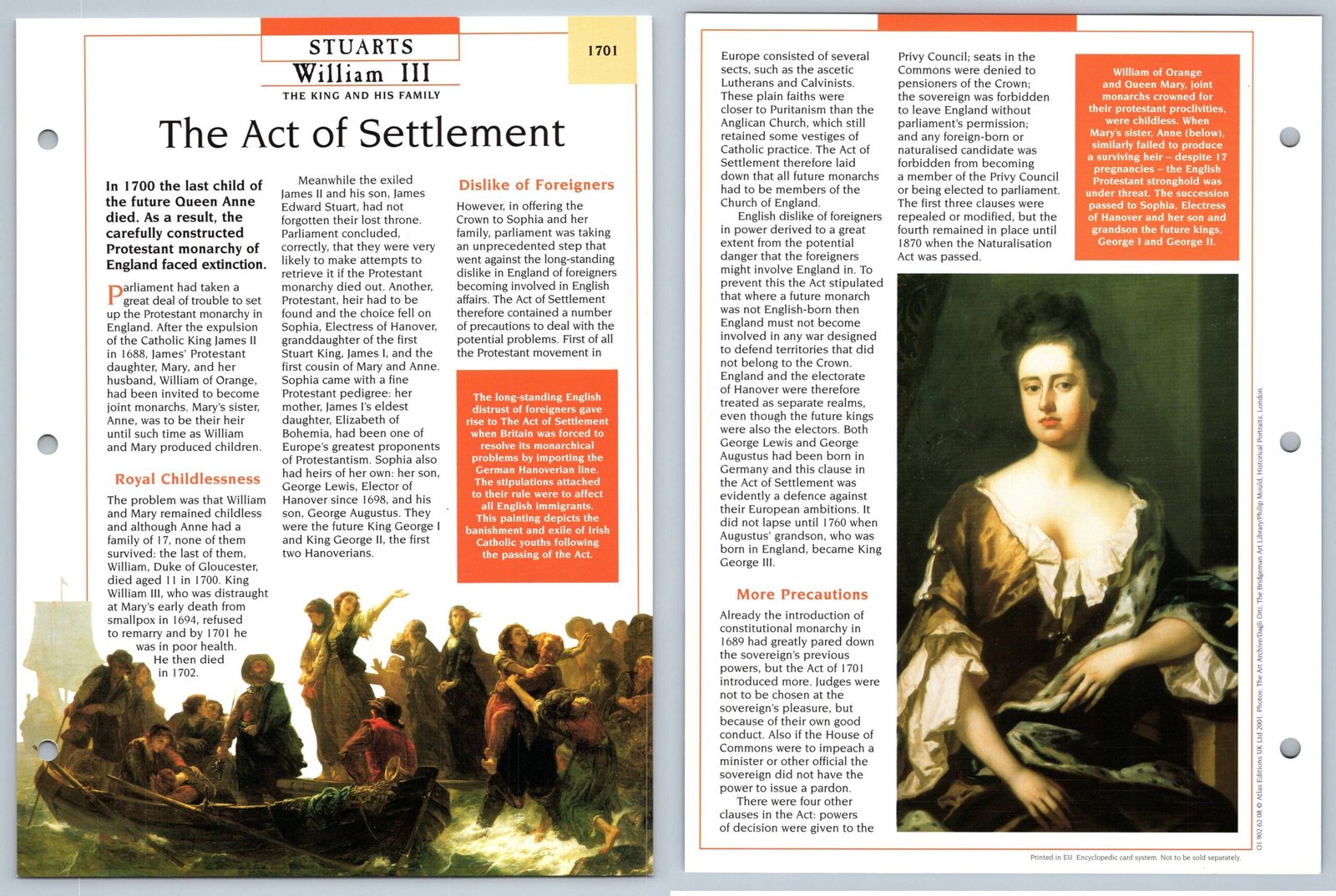
The Act of Settlement 1701 spelled this out very clearly.
It barred those “born out of the Kingdoms of England, Scotland or Ireland, or the dominions thereunto belonging” from being Privy Councillors, MPs or holding “any office or place of trust”, unless born of English parents. The message was blunt: our laws and our Crown should not be controlled by outsiders with no tie to our kingdoms.
The Acts of Union did not abolish that logic – they stretched it.
The old English and Scottish subjects were merged into a single status of “British subject”, and the new Parliament at Westminster spoke in the name of “Great Britain”. Scots gained access to English power; England gained a bigger state – and slowly, but surely, the word “English” drifted out of the constitutional script.
The rise of a British elite
Over the eighteenth and nineteenth centuries, a British ruling class took shape.
Landed families and commercial interests dominated Parliament and the new imperial state; they expanded trade, built an empire and, in the process, concentrated power in a small, self‑confident elite. Legal status still distinguished British subjects from foreigners, but within the elite, the badge was now British, not specifically English.
This British elite had enormous success on its own terms.
It backed industrialisation, used public borrowing to fight wars, and built the framework of a global empire. But the price of that success was that England – the country most people here actually lived in and identified with – became just the core territory of a British project, not a nation with its own political life.
By the twentieth century, the pattern was clear.
The state took on vast debts in two world wars and then to build the post‑war welfare system; debt‑to‑GDP soared above 200% and then gradually fell again as the economy grew. The decisions were made in London, in the name of Britain. The biggest share of the tax base and the burden lay in England.
England: responsibility without power
Fast‑forward to today and the picture is upside‑down.
Scotland, Wales and Northern Ireland all have their own legislatures and executives. England, the largest and oldest nation in the islands, has none. Its domestic laws are still made at Westminster by a Parliament that is formally “of the United Kingdom”, not of England.
Attempts to patch this, like English Votes for English Laws, were token gestures.
A few standing orders, a special committee stage, a double‑majority rule – and then the whole scheme was quietly scrapped in 2021 after never once changing the outcome of a vote. It was not a parliament for England; it was a procedural fig‑leaf for a deeper imbalance.
Yet the bill for British choices still lands on English doorsteps.
Centuries of borrowing for empire, wars, and then for a centralised welfare state and crisis after crisis have left the modern UK with very high public debt again. The state that borrowed called itself British; the people asked to accept squeezed services, higher taxes and “tough decisions” are, overwhelmingly, English.
Governed as English, ruled as British
From a deep‑rooted Englishman’s perspective, the story is brutally simple:
- Then: England had its own parliament and laws, with office reserved in principle to natural‑born subjects of the Crown of these kingdoms.
- Union: power moved to a British Parliament and a British ruling class, speaking less and less in the language of England and more in the language of empire and “the UK”.
- Now: England has no parliament of its own, no constitutional voice that speaks its name, yet carries the largest share of the taxes and the consequences of British borrowing and British decisions.
That is not a plea to avoid responsibility.
It is a demand for reciprocity: if English people are expected to shoulder the debts and duties of a state, they are entitled to a political order in which England exists in law, has its own institutions, and is governed by people whose primary loyalty is to this country, not to an abstract “Britain” that never has to look an English town in the eye.
What England is owed now
Other nations – from former colonies to post‑Soviet states – insisted on being governed by their own after empire, and nobody called that strange. South Africa and Zimbabwe said their lands must be run in the interests of their historic peoples, not distant or imported elites. A united Ireland would rest on the same logic.
England has never been given the same courtesy.
Its parliament was dissolved into a Union. Its name was blurred into “Great Britain” and then “the UK”. Its people have been told they are either nothing but “British” or that wanting to be represented as English is somehow suspect.
The case now is not for tearing up obligations or turning on neighbours.
It is for restoring something older and more honest: England as a self‑respecting country, with a parliament in its own name, and leadership that treats English towns and counties as a living inheritance, not as cells in a spreadsheet.
That is not extremism.
It is the minimum any historic nation should expect after three centuries of being ruled in someone else’s language.
Further Reading:
The British Establishment: How England Was Brought to Its Knees
[…] From English Law To British Rule […]