If you live in the capital, you get used to a certain rhythm: work, commute, see friends, repeat – with news alerts pinging on your phone about yet another stabbing or shooting nearby. This weekend, headlines about a triple stabbing on Edgware Road and a shooting in Bexleyheath turned that familiar background hum of concern into something much louder and harder to ignore. Another weekend of violence in Khan’s London is not just a catchy phrase; it is how too many ordinary people now describe their city when they talk to family outside the M25.
In this article, the aim is to move beyond the quick-hit breaking news format. You will see what has actually happened on the streets, why weekends in particular seem to carry a higher risk, and what, realistically, needs to change if London is going to feel safe again. Along the way, expect some straight talking, personal insights, and examples from everyday life in the capital – not theory from a meeting room.
Edgware Road triple stabbing: a busy road becomes a crime scene
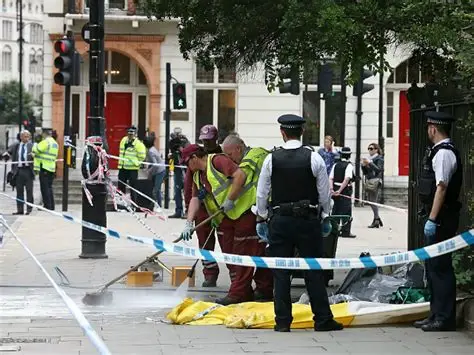
In the early hours, just before 1am on Sunday, emergency services rushed to Edgware Road after reports of “multiple stabbings” on one of central London’s busiest routes. Three people ended up in hospital, and at least one man is reported to be fighting for his life after the attack. For many Londoners, this is not some backstreet incident; Edgware Road is a major artery used by workers, taxi drivers, and late-night revellers every single day.
If you have ever walked or driven along that stretch, you will know how exposed it feels even on a normal night – shops still lit, traffic flowing, people milling around for food after a late shift. Turning that environment into a live crime scene, with blue lights, taped-off pavements and blood on the road, sends a different kind of message to anyone passing through. The question that sticks is simple: if multiple people can be stabbed there, at that time, what stretch of the city actually feels off-limits to serious violence anymore?
Bexleyheath shooting: when the high street is no longer a safe bet
On the same weekend, another part of the capital woke up to the reality of serious violence on its doorstep. Shortly after 2am, emergency services were called to Broadway in Bexleyheath following reports of a shooting. Paramedics, ambulance crews and even a trauma team from London’s Air Ambulance were sent to the scene, and two people were taken to hospital – one with a gunshot wound, another with a head injury.
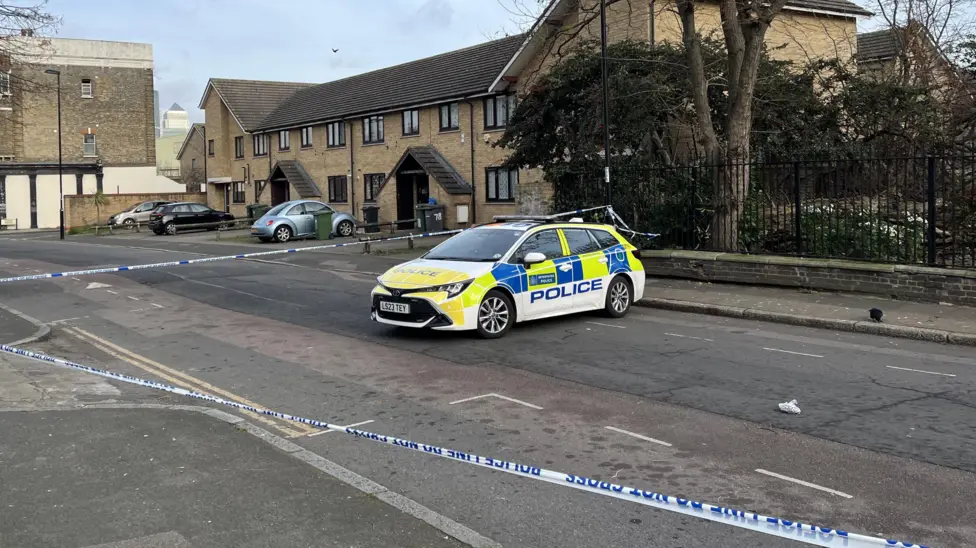
By mid-morning, photos showed a huge police cordon stretching along the high street near an Esso petrol station and a Londis store, with several police vans parked up and officers standing guard. For local residents, that is not some distant “city centre issue”; that is their everyday shopping area effectively turned into a sealed-off incident zone. When the place where you buy milk, catch the bus or meet friends is suddenly behind police tape, it changes how you feel every time you walk there afterwards.
Why weekends feel more dangerous in the capital
If you read London crime reports often enough, a pattern starts to emerge: many of the most serious incidents cluster around weekends and the early hours. That is when people are out socialising, alcohol and grudges mix, and, crucially, when individuals who routinely carry knives or guns feel most confident they can blend into the crowd.
From a practical point of view, most Londoners quietly adapt. Instead of waiting for a grand strategy from City Hall, they change their own behaviour. That could mean:
- Choosing a different night bus route that feels better lit and more crowded.
- Avoiding known flashpoint areas after midnight, even if it adds ten minutes to the journey.
- Keeping music volume low in headphones so they can actually hear what is happening around them.
This is where the phrase “another weekend of violence in Khan’s London” starts to bite. It is not about one isolated incident. It is about a steady drip of stories – Edgware Road stabbings here, Bexleyheath shooting there – that gradually train people to behave as if serious violence is a normal, predictable part of the city’s weekend routine.
Is Khan’s London getting safer or more dangerous?
The big argument online is always the same: some insist London is “no worse than any other big city,” while others talk as if the capital is spiralling out of control. The reality is more uncomfortable. Even if official statistics can be used to show ups, downs and seasonal changes, the lived experience for many Londoners is that violent crime is uncomfortably close to home. A triple stabbing on a major central road and a shooting on a busy suburban high street in the same weekend are exactly the kind of stories that shape that feeling.
When people use the phrase another weekend of violence in Khan’s London, what they usually mean is this: after years of repeated promises about crackdowns, the everyday reality has not shifted in the way they hoped. They still see the same patterns – knives on public transport, fights spilling out of venues, police cordons where they shop or work. Leadership, ultimately, gets judged on outcomes people can feel, not on press releases and slogans.
How it actually feels: everyday life in a city of cordons and sirens
From a distance, crime stories look like numbers and locations. Up close, they feel very different. Walking home past a taped-off Edgware Road, seeing pools of light from police vans and uniformed officers standing guard, is not something you shrug off by Monday morning. The same goes for residents in Bexleyheath who woke up to find their Broadway sealed, buses diverted, and shops operating under the shadow of a very recent shooting.
Over the years, many Londoners quietly collect their own mental map of “places to be extra careful”. That might be a particular junction, an underpass, a late-night bus stop, or an area outside a specific venue. The problem is that this map is expanding. When major routes and normal high streets repeatedly feature in reports of stabbings and shootings, it reinforces the sense that the safe zones are shrinking, not growing.
What needs to change: practical steps, not slogans
If another weekend of violence in Khan’s London is going to stop being a familiar phrase, the response has to be more than social media statements and short-lived operations. Londoners want to see:
- Visible, consistent policing in the areas where people actually live, travel and socialise – not just short bursts of activity.
- Relentless focus on habitual offenders who are repeatedly found carrying weapons or involved in serious violence.
- Simple environmental changes like better lighting, working CCTV, and design that discourages loitering in known hotspots.
At the local level, residents also have more power than they sometimes realise. Communities that pass on information about emerging problems – fights outside specific venues, groups routinely carrying knives, or suspicious activity near high streets – help build the picture officers need to act. That does not solve everything, and it does not replace the responsibility of the Mayor and the Met, but it shifts the balance slightly towards those who just want to get home safely at the end of the day.
A city at a crossroads
The phrase “another weekend of violence in Khan’s London” should never become so normal that it slides by without reaction, but that is the risk the city now faces. When triple stabbings on central routes and shootings on local high streets are treated as just another update in the news feed, something important has already been lost. The capital’s reputation, and more importantly its residents’ sense of safety, depends on refusing to accept that level of violence as the price of living in a big city.
If you live in London, or care about England as a whole, this is the time to pay attention, ask questions, and demand more than carefully crafted statements from those in charge. Stay informed, support local safety initiatives where you can, and hold political leaders – from City Hall downwards – to the simple standard that should matter most: can ordinary people walk their own streets without constantly looking over their shoulder?
FAQs
1. What happened on Edgware Road this weekend?
Emergency services were called just before 1am to reports of multiple stabbings on Edgware Road, a major central London road, with three people taken to hospital and one man fighting for his life.
2. Where did the Bexleyheath shooting take place?
The shooting happened on Broadway in Bexleyheath, a busy high street, shortly after 2am, leading to a large police cordon near an Esso petrol station and Londis store.
3. How many people were injured in Bexleyheath?
Two people were taken to hospital: one with a gunshot wound and another with a head injury, after emergency and trauma teams treated them at the scene.
4. Why are so many serious incidents happening at weekends?
Many of the most serious incidents cluster around weekend late-night and early-morning hours, when more people are out, alcohol is involved, and offenders carrying weapons feel they can blend into crowds.
5. What can ordinary Londoners do to stay safer?
Practical steps include choosing well-lit, busier routes home, staying alert (not fully shut off with headphones), avoiding known flashpoints at high-risk times, and reporting recurring problems or suspicious behaviour to the police.
Further Reading:
North London Rapist: How a 4‑Year Sex Attack Spree Exposed System Failures