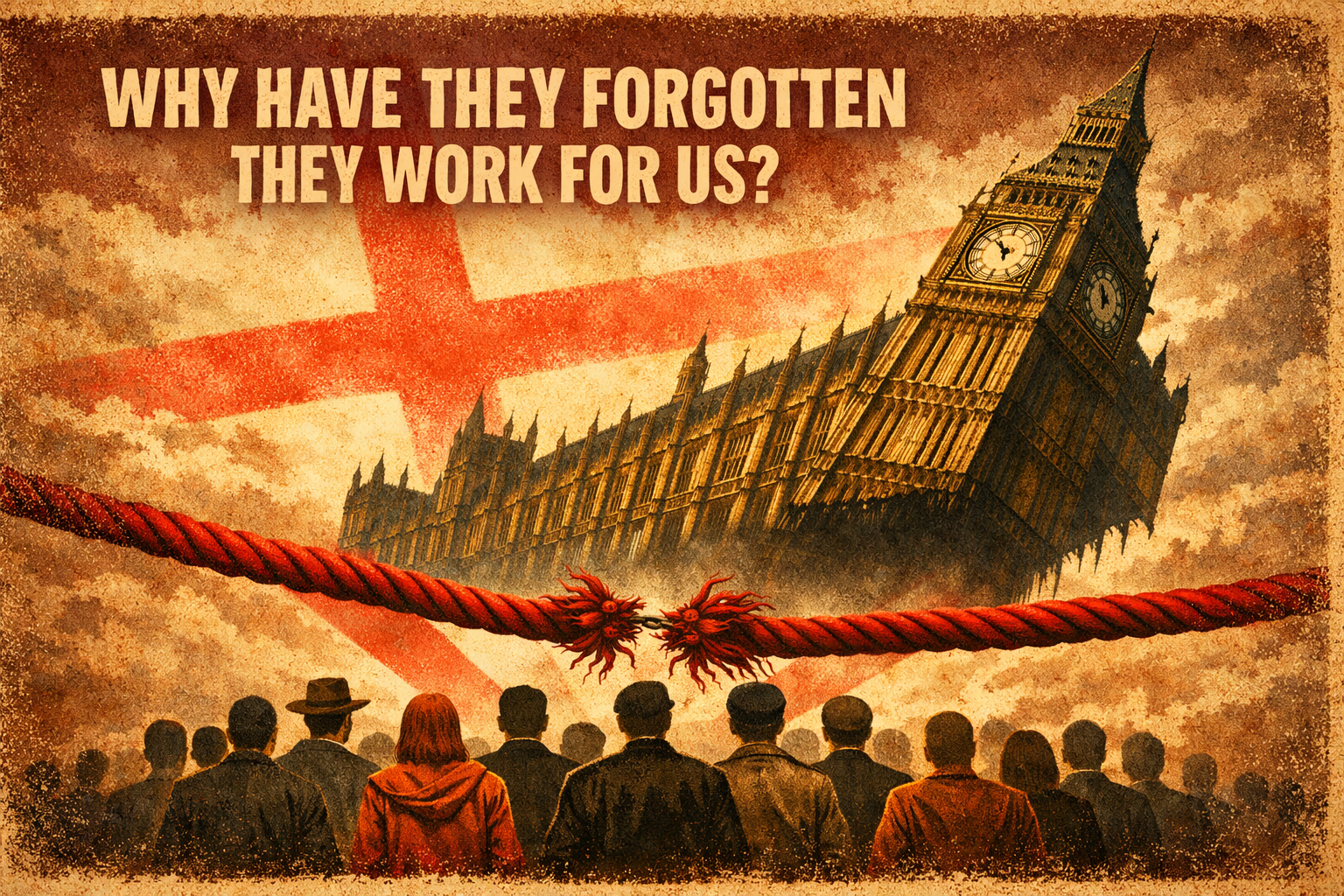

Introduction: when failure gets a medal
Every so often a story pops up that sums up exactly why so many people feel this country is upside down. The Labour leader of what’s been called “Britain’s worst council” is given an OBE, while residents living with damp, danger and years of official failure look on in disbelief. You do not have to live in Lambeth to understand why people are angry; this is the kind of headline that makes you shake your head and mutter, no wonder England is so broken when the British reward failure.
If you have ever tried to get a council repair done, challenge a bad decision, or fight a planning scheme that nobody on your street actually wanted, you will recognise the pattern. Ordinary people battle for months or years just to be heard, and when the dust settles, it is often the officials at the top who end up with promotions, bigger titles and – in this case – a royal honour. In this article, the aim is to unpack what has happened in Lambeth, why it matters far beyond one borough, and what can realistically be done to stop a system that seems to give medals for mess.
The Lambeth OBE row: what actually happened
The basic facts are stark. Claire Holland, the Labour leader of Lambeth Council in south London, has been awarded an OBE in the New Year Honours list. On paper, the citation is all about service to local government and the community. On the ground, locals know her council has just been through a year of High Court defeats and brutal criticism from the housing ombudsman.
In May, the High Court ruled that Lambeth acted unlawfully when introducing a low‑traffic neighbourhood, pushing through changes while ignoring legitimate concerns raised by residents. Barely a week later, the court found the council had acted unlawfully again, this time over the approval of multiple large music festivals in a park despite serious objections from local people worried about noise, damage and disruption. When that record is followed by an OBE, you can see why residents told reporters the honour was a “joke” and felt like the establishment “sticking two fingers up to us”.
From boarded-up windows to honours lists: rewarding the wrong things
The Lambeth story is not just about traffic schemes and festivals. The Local Government and Social Care Ombudsman has previously named Lambeth among the worst offenders in the country after years of failure on social housing. One example in its reports described a child’s bedroom window that had been boarded up with wood for more than three years, left to rot and increasing the risk of falling. Another involved a severely disabled child housed for two years in a property so small that her wheelchair could not even fit through the front door.
At the same time, Lambeth has been ranked in the bottom 10 per cent of councils for adult social care performance. Put bluntly, this is not a town hall that has just hit a small bump in the road; it is one with deep, long-running problems that leave real families living with the consequences every single day. When someone at the top of that organisation is handed an honour, it looks – from the street – like the system is rewarding the wrong things entirely. It says that managing the politics of a borough matters more than fixing windows, ramps and basic safety.
No wonder England is so broken when the British reward failure
The phrase no wonder England is so broken when the British reward failure is more than a spicy headline; it captures something many people feel in their bones. They see it in local councils, but also in parts of Whitehall, quangos, even some big corporate boards. When something goes badly wrong, the people on the front line get blamed or ignored, while those at the top quietly move sideways, upwards, or onto the honours list.
From the outside, it looks like a culture of “failing upwards”. If your council racks up Ombudsman complaints, breaks the law over traffic schemes, and treats parks and estates as cash machines, you might expect some serious consequences at senior level. Instead, what you often see is a carefully worded apology, a “learning lessons” report, then business as usual. Over time, that eats away at any sense that England is run for the benefit of ordinary people. When a leader of a heavily-criticised authority receives an OBE, it feels like the establishment congratulating itself while everyone else deals with the fallout.
Why ordinary people lose faith in democracy and institutions
These things matter because they chip away at more than just patience; they erode faith in democracy itself. If you live in a flat with mould creeping up the walls, or push a wheelchair through a doorway that was never designed for it, your trust is not built by hearing that your council boss has been recognised by the King. It is built by repairs that actually happen, decisions that respect residents, and apologies backed by real change.
When that does not happen, people understandably become cynical. You see it on the doorstep and in local meetings: “They never listen”, “They’re all the same”, “What’s the point of voting?” That cynicism is not accidental; it is the predictable result of years where those at the top appear to be rewarded regardless of performance. Over time, it becomes easier to convince yourself that England is simply broken, that there is one rule for officials and another for everyone else – and honours handed out in cases like Lambeth only reinforce that impression.
Breaking the cycle: how do we stop rewarding failure?
If the country wants to stop hearing phrases like no wonder England is so broken when the British reward failure, then it has to change how success and failure are judged at the top. That starts with some very practical reforms. For example, an honour for a serving council leader should trigger automatic checks with the Local Government Ombudsman, recent High Court judgments, and the regulator for housing standards. If there are fresh findings of unlawful decisions or serious, systemic failures affecting vulnerable residents, the honour should be frozen or withdrawn until those issues are genuinely resolved.
There is also a case for bringing residents more directly into the conversation. Imagine an independent panel for each major honour in local government that includes people from tenants’ associations, disability groups and community organisations. Their role would not be to wage political battles but to say, in plain language, whether a leader’s record feels honour‑worthy on the ground. Performance-linked recognition is normal in the private sector; there is no good reason why senior public officials should be shielded from that basic principle.
What you can do locally when your council fails you
It is easy to look at stories like this and feel powerless, but residents are not without tools. Over the years, some of the most effective pressure on failing councils has come from organised, persistent local campaigns rather than one‑off social media outbursts. A few practical steps that actually move the dial:
- Get organised, not just angry
Small tenants’ and residents’ associations that keep good records of complaints, missed repairs and broken promises were key to some of the Ombudsman’s most damning findings, including in Lambeth. Numbers, dates and photos carry more weight than vague frustration. - Use Freedom of Information (FOI)
FOI requests can reveal how decisions were made, who signed off what, and how many complaints have been upheld. That information can feed into press stories, councillor questions and, in some cases, legal challenges. - Work with local media and councillors
Local outlets, community blogs and even national channels will often pick up well-documented stories, especially when they show the human impact – such as children living with boarded‑up windows for years. Councillors, even in the ruling group, can be pushed to ask awkward questions when they know residents are watching. - Vote, tactically if needed
Ultimately, the people signing off bad decisions rely on elections to stay in charge. Turnout in local elections is often low; organised residents can make a real difference, whether by backing challengers or sending a message through independent and smaller-party candidates.
These are not magic bullets, but they are far more effective than suffering in silence or simply assuming nothing can change.
Conclusion: England deserves better than medals for mess
When the leader of a council with unlawful decisions, failing housing and a bottom‑tier social care record collects an OBE, it is no surprise that people say no wonder England is so broken when the British reward failure. It sends the message that what matters most is playing the game of politics and bureaucracy well enough to impress the right people, not fixing the problems that keep residents awake at night.
England deserves better than that. Honours should mean something, especially when they are attached to public service. If the country wants to restore trust, it needs to start by refusing to hand out medals for mess, and instead recognise those who quietly do the hard, unglamorous work of putting things right. As a reader, the most powerful thing you can do is simple: stay informed, get organised locally, and refuse to accept that this is just “how it is now”. Broken systems can be fixed – but only when enough people decide they have had enough of rewarding failure.
FAQs
1. Who is the Labour boss at the centre of this row?
The controversy focuses on Claire Holland, Labour leader of Lambeth Council in south London, who has been awarded an OBE in the New Year Honours.
2. Why are locals so angry about her OBE?
Residents point to High Court rulings that Lambeth acted unlawfully over a low‑traffic neighbourhood and park festivals, along with years of serious housing failures, and see the honour as ignoring their experiences.
3. Why is Lambeth described as “Britain’s worst council”?
The housing ombudsman named Lambeth among the worst offenders after repeated failures, including dangerous disrepair, unsuitable homes for disabled residents, and a poor adult social care record.
4. How does this link to the idea that England is “broken”?
When senior figures at struggling councils receive honours instead of consequences, it feeds the wider sense that the system rewards failure and that ordinary people’s problems do not matter.
5. What can residents do if they think their council is failing?
Practical options include forming residents’ groups, documenting problems, using FOI, working with local media, pressing councillors, and using local elections to hold decision‑makers to account.
Further Reading:
- UK Visa Fee Waivers: Who Pays and Who Answers?
- Asylum Accommodation Rent Offers: Why England Deserves Answers on Homes and Priorities
- Even the Government Says English People Are White: Why Is It Controversial?
- Migrant Households and Universal Credit: England Cannot Keep Paying Without Asking Questions
- Luton Gang Violence: How a Town Was Failed