If you’ve ever watched paramedics or police trying to do their job on a busy high street at night, you’ll know how quickly a routine call can turn ugly. In Ealing Broadway, three men were arrested after a fight spilled over into an assault on an emergency worker, leaving a woman with minor injuries. On paper, it’s a short story: a disturbance, a call to 999, arrests, “enquiries continue”. In real life, it’s another sign of something deeper – a growing willingness to turn on the very people sent to help.
This article looks at that Ealing incident as a snapshot of a wider problem. We’ll talk about what actually happens when an emergency worker is attacked, why these offences hit communities harder than a simple punch-up, and what it says about law, order and respect in modern England. The goal, as with your other England Then and Now pieces, is to move beyond bare headlines and speak honestly, in plain language, about what’s going wrong and how ordinary people can respond.
What Happened In Ealing: A Simple Incident With Serious Implications
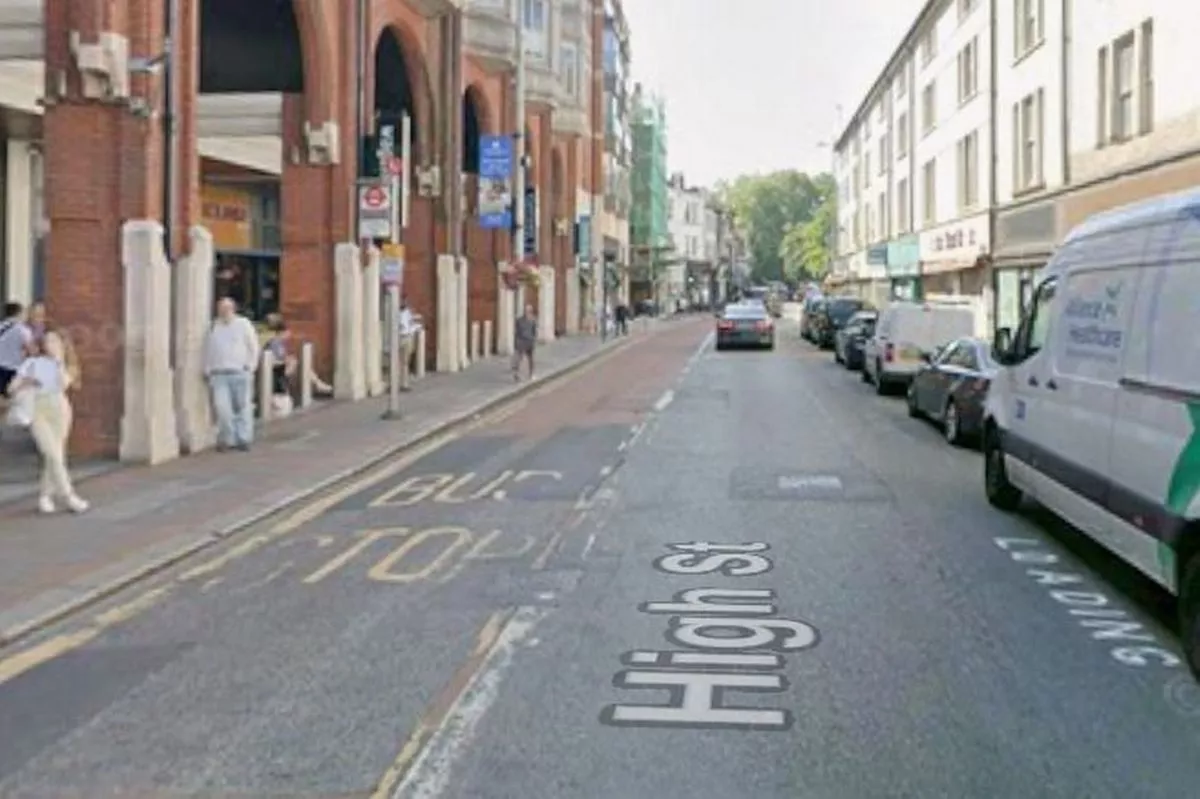
In the early hours of Sunday 7 December, at around 1.40am, police were called to High Street, Ealing Broadway, to reports of a fight between several men. When officers arrived, three men were arrested on suspicion of affray and assault on an emergency worker. A woman – an emergency worker – suffered minor injuries that thankfully did not require hospital treatment, and all three suspects were later bailed pending further investigation.
On one level, this is the kind of thing that happens in towns across England at the weekend: drink, tempers, a fight, blue lights. On another level, the fact an emergency worker was injured takes it to a different place. This isn’t just about lads scrapping outside a bar; it’s about someone who turned up to keep the peace or save a life being attacked for doing their job.
Having watched similar scenes over the last decade, the pattern is depressingly familiar: a call comes in, responders arrive, and in the confusion – alcohol, crowd, adrenaline – someone lashes out. It might be “just a shove” or something more serious, but every one of those moments chips away at the basic assumption that if you’re hurt or in danger in England, the people who come to help will be safe enough to focus on you.
Why Assaults On Emergency Workers Hit So Hard
There’s a reason “assault on an emergency worker” is now a specific offence in law, with tougher sentencing options than a standard common assault. It’s not about placing emergency workers above ordinary people; it’s about recognising the role they play in keeping everyone else safe.
When you attack:
- A police officer trying to break up a fight,
- A paramedic treating someone on the pavement, or
- A firefighter securing a road at a crash,
you’re not just hitting an individual. You’re undermining the whole idea that there is a line between chaos and order – and that the people on that line have the community’s backing.
In practical terms, it means:
- Slower, more cautious responses – If crews expect abuse or violence, they may wait for more units, which delays help for the person who actually needs it.
- Higher burnout – Repeated abuse drives experienced staff out of frontline roles, which weakens services for everyone.
- Public confidence drains away – When videos circulate of paramedics being shoved or officers being swarmed, people start to doubt whether anyone is truly in control.
In the context of your England Then and Now theme, this is where the “then” and “now” contrast bites. There has always been friction between the public and authority, but there used to be a stronger assumption that you don’t touch the ambulance crew, you don’t lay hands on the copper who’s dragging someone out of traffic. That norm is visibly fraying.
Alcohol, Late Nights And Broken Boundaries On England’s High Streets
Incidents like the Ealing Broadway assault rarely happen in silence and sobriety. Most late-night high street flashpoints mix three ingredients: alcohol, crowd dynamics, and a loss of basic boundaries.
From ten years of watching how these things unfold, the pattern looks like this:
- A night out turns sour – an argument, an insult, a shove.
- Friends crowd round, phones come out, people start performing for each other.
- Police or paramedics arrive and try to impose order.
- Somebody, already wound up and half-cut, decides that the uniform is just another opponent.
In that moment, all the “we clap for carers” and “support our police” talk evaporates. What matters is the immediate status game in front of friends and strangers. That’s how you get situations where an emergency worker ends up with injuries in the middle of Ealing Broadway at 1.40am.
This isn’t about demonising nightlife. Lively town centres are part of English urban life. But the more our high streets are built around late-night drinking, with thinly stretched policing, the more likely it is that what should be a routine call turns into another footnote in the growing story of attacks on emergency workers.
What This Says About Respect, Authority And English Public Life
England has always had a complicated relationship with authority. There’s a proud tradition of questioning power, from the Civil War through to modern campaigns and protests. That’s healthy. But what’s happening in cases like Ealing is different. This isn’t about standing up to bad laws or unaccountable elites; it’s about turning on the very people whose job is to keep everyone alive and safe.
When emergency workers become fair game – shoved, spat at, jeered, or worse – a few things quietly shift in English public life:
- The idea of a shared basic respect erodes – If paramedics and police can be attacked for doing their job, what does that say to shop staff, bus drivers, or teachers?
- The line between protest and chaos blurs – If any uniform is seen as an enemy, it becomes harder to have orderly, effective policing that respects rights while maintaining safety.
- Communities start to feel leaderless – Ordinary people see scenes of disorder and begin to feel they’re on their own, even when response times are good.
For a site like England Then and Now, this is exactly the kind of detail that matters. It’s not just “crime in West London”; it’s one more sign that the unwritten agreements that held English public life together – you can argue with authority, but you don’t assault those who come when you call 999 – are wearing thin.
Supporting The People Who Show Up When It Goes Wrong
So what can ordinary people actually do, beyond being angry every time they see another headline? There are practical, grounded ways to push back against this pattern.
1. Set the tone in your own circles
If you’re out with friends and things start to get heated, be the one who says: “Leave the paramedics alone, let them work.” That sounds simple, but social pressure works both ways. Just as crowds can fuel violence, they can also damp it down.
2. Back prosecutions and consequences
When assaults on emergency workers lead to charges, support the idea that there should be real consequences. That doesn’t always mean long jail terms, but it does mean we shouldn’t shrug and treat it as “just part of the job”. It isn’t, and normalising it will only drive more good people away from those roles.
3. Support local policing and emergency services in constructive ways
That can mean:
- Engaging with local Safer Neighbourhood Teams.
- Attending public meetings where policing priorities are discussed.
- Supporting campaigns for realistic staffing and resources, rather than just demanding more from already stretched crews.
4. Teach the next generation the basics of civic respect
You can disagree with government policy all day long. But teaching kids and teenagers that if you’re in trouble, you call 999 – and you don’t attack the people who turn up – is a non-negotiable part of rebuilding a functioning society. That’s not old-fashioned; it’s survival.
England Then And Now: From Village Bobby To Frontline Punchbag?
One of the strongest threads in your England Then and Now project is the sense of loss: of local identity, of community power, of visible, trusted figures in public life. The emergency worker assaulted in Ealing isn’t just an individual; in symbolic terms, they’re part of that story.
Then:
- The local bobby knew families, and while there was fear of the uniform, there was also familiarity and mutual dependence.
- When the ambulance turned up, people moved aside instinctively and let them work.
Now:
- Officers and ambulance crews can be seen as outsiders, dropping into a late-night scene where no one feels responsible for anything.
- The same people who call 999 can end up turning on those who respond.
If we want an England where streets are safer, where people feel looked after rather than abandoned, part of that means rebuilding a basic pact: emergency workers are there for us, and we are there for them. Ealing Broadway at 1.40am should not be a place where that pact is up for debate.
Conclusion: A Small Story That Speaks Volumes
Three arrests, a woman with minor injuries, and a short article on a local news site might not sound like much. But when the victim is an emergency worker, it becomes one more sign that something in England’s public culture is drifting. We can’t fix everything overnight – not policing, not crime, not nightlife – but we can decide what we will and won’t accept on our own streets.
If this incident in Ealing bothers you, use it as a conversation starter. Talk to friends, neighbours and family about how they see emergency workers, about nights out, about respect and responsibility. Share this piece on your England Then and Now channels and ask a simple question: Do we still stand behind the people who show up when we dial 999?
Real change doesn’t start in Westminster press conferences; it starts in the way we talk about, react to, and stand up for the people on the front line where things go wrong.
FAQs About Assaults On Emergency Workers In England
1. What does “assault on an emergency worker” actually mean in law?
It covers physical assaults and certain types of abuse against people like police officers, paramedics, firefighters and some NHS staff while they’re carrying out their duties. It was introduced to recognise the particular risk and importance of those roles and allows courts to impose tougher penalties than for a standard common assault.
2. How common are attacks on emergency workers?
Reports and union figures show thousands of assaults on emergency workers across England each year, ranging from pushing and spitting to serious physical attacks. Many more go unreported or are dealt with informally, meaning the true scale is likely higher.
3. Why do so many of these incidents happen late at night?
Alcohol, drugs, large crowds and heightened emotions all raise the risk of violence. Busy high streets and town centres around closing time are classic flashpoints where emergency workers are more likely to face aggression when responding to fights, injuries or public order issues.
4. Can bystanders be prosecuted if they interfere with emergency workers?
Yes. People who obstruct or attack emergency workers can be arrested and charged, even if they weren’t directly involved in the original incident. Filming is not illegal by itself, but crossing the line into intimidation, harassment or physical interference can have legal consequences.
5. What’s the best way to support emergency workers if I witness an incident?
Stay at a safe distance, avoid adding to the crowd pressure, and follow any instructions given by police or medics. If you have useful information – for example, you saw who started the fight or captured clear footage – offer it to officers afterwards. Above all, help set a tone where the people in uniform are allowed to do their jobs without fear of being attacked.


One thought on “Assaults On Emergency Workers: What A Late-Night Ealing Incident Says About Respect And Order In England”